

A father working to rebuild his life is detained for nearly a year after a firearm arrest, navigating what he says are gaps in care, oversight, and accountability.
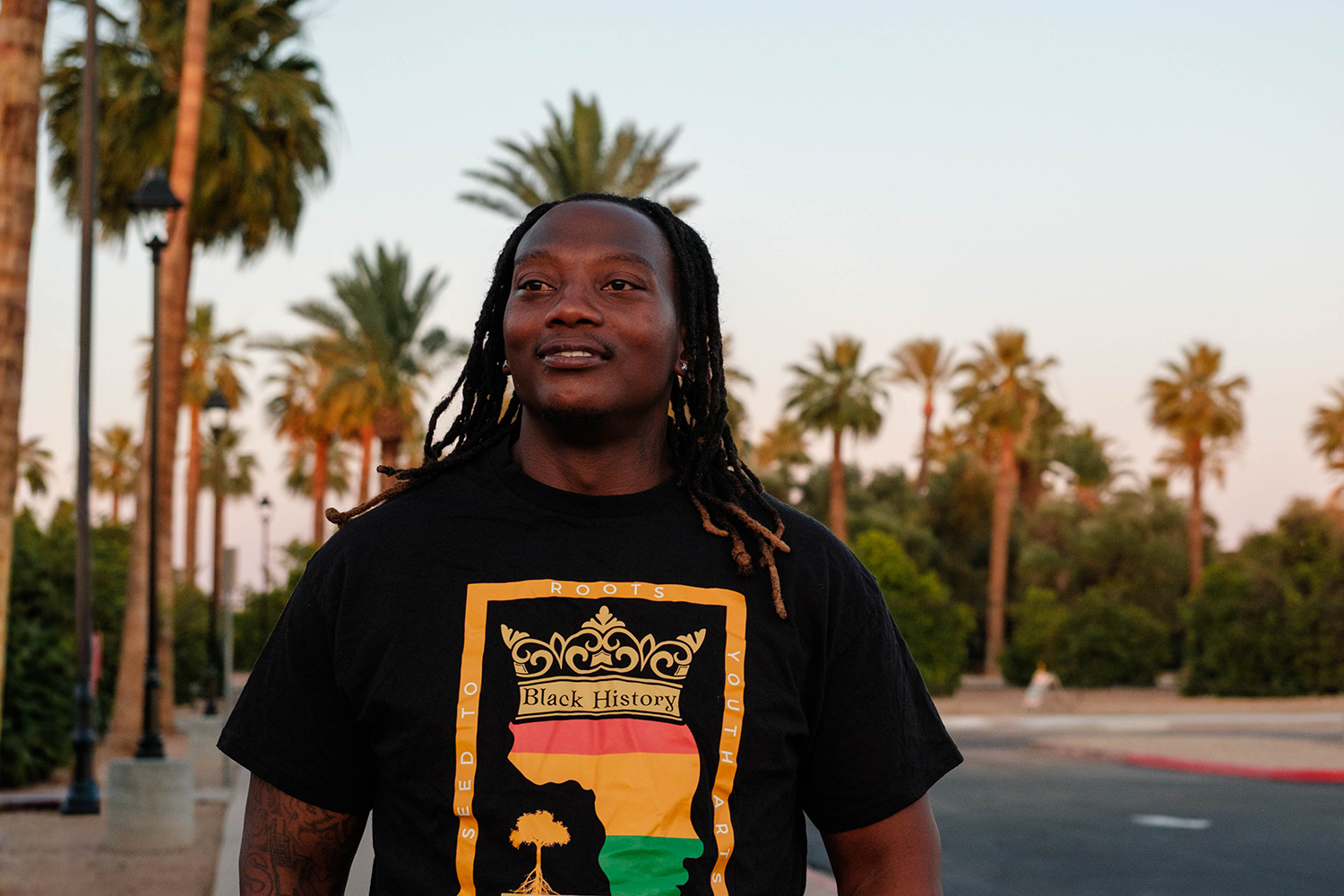
After growing up in what he describes as “rough” conditions, Tyree spent much of his adult life trying to stabilize what he could control. He anchored himself in family – as a father, a husband and an uncle – and worked to rebuild after struggling with addiction. He moved into community work, for a period, earning a peer support certification to help others navigate recovery and the institutional barriers that often come with it.
His path has not been linear. Tyree has spent time incarcerated, an experience that shapes how he understands the systems that manage people in custody. In 2023, he was arrested again after purchasing a gun illegally. He was later charged with possession of a firearm.
“I had it for protection only for my family. That’s it,” he said. “In this day and time, how can you live without it?”
Because he was on parole at the time, the arrest triggered a hold that prevented him from bonding out. He remained in custody for nearly a year while his case moved forward.
Tyree says he acted as his own advocate, researching case law, filing grievances, and trying to navigate the legal process from inside the facility.
During those eleven months, Tyree says he acted as his own advocate, researching case law, filing grievances, and trying to navigate the legal process from inside the facility.
“When they train the [correctional] officers, the rookies, they don’t train them with empathy and compassion,” he said. “So you get below the bare minimum of what you’re supposed to get.”
He describes what he says were inconsistent conditions, including limited access to legal materials and uneven medical care. The treatment, he said, shaped his understanding of how the system operates in practice.
“They say we’re innocent until proven guilty,” he said. “No, we’re not. We’re guilty and proven innocent.”
He also says there was pressure to resolve cases quickly.
“They’ll tell you, ‘Sign this plea for five years or go to trial and lose and get a thousand,’” he said. “It’s set up for us to lose.”
Most cases do not go to trial. Instead, people are often offered a plea deal: admit guilt and accept a sentence, usually with the promise of less punishment than they might face if they go to trial and lose.
Tyree was describing a common pressure in the criminal justice system. Most cases do not go to trial. Instead, people are often offered a plea deal: admit guilt and accept a sentence, usually with the promise of less punishment than they might face if they go to trial and lose.
For someone sitting in jail, that can be a hard choice. A person may want to fight the case, but jail can cost them their job, their housing, time with their children, and access to medical care. Even if they believe they have a defense, taking a plea may feel like the only way to get the case over with or avoid an even longer sentence.
Prosecutors have a lot of power in that process. They decide what charges to bring, what deal to offer, and what punishment someone could face if they reject the deal. That pressure is sometimes called the “trial penalty,” because going to trial can come with the risk of much harsher punishment.
That is why Tyree saw the process as stacked against him. While he was detained, he said, fighting his case meant trying to defend himself from inside the same jail that controlled his mail, legal papers, and daily movement.
While Tyree was detained, his brother was also taken into custody. Days later, his brother died.
Tyree alleges that the death was related to withdrawal and a lack of adequate medical care. He says his understanding is based on records and surveillance footage later reviewed by the family.
According to Tyree, the footage shows his brother last moving at 11:49 p.m. He says his brother was not found unresponsive until about 3:00 p.m. the following day. During that period, he says, multiple staff shifts rotated through the unit, and welfare checks were supposed to occur regularly.
Tyree alleges those checks did not happen.
“They claim medical came to see him,” he said. “But the camera don’t show him moving.”
These claims have not been independently verified, and jail officials have not publicly responded to the specific allegations.
When the family was notified of his brother’s death, Tyree said the information came quickly and then stopped. Relatives first learned his brother had been booked into the Maricopa County jail, and while trying to determine if they could help with his bond (around $10,000), they received another call: his brother had been found unresponsive in his cell and had died.
After that, Tyree said, the family struggled to get answers from the facility. Investigators who had notified the family did not return messages or make themselves available for follow-up questions. With no clear line of communication, the family went to the intake facility to ask what had happened, seeking to speak with a sergeant or another official. Instead, they were repeatedly brushed off. The encounter escalated when Tyree’s father continued demanding information, and officers placed him in handcuffs and put him in the back of an SUV, “as if they were preparing to take him to jail.” Tyree said he recorded part of the encounter because the family had gone there seeking basic information about a death in custody and still felt they were being denied answers.
For Tyree, the experience reinforced concerns he had already formed during his own incarceration. He describes a system where, in his view, care can be inconsistent and accountability unclear.
His detention ended in September 2024, when his parole hold lapsed and The Bail Project posted his bond. After nearly a year in custody, he returned home.
He ultimately resolved his case through a plea agreement, accepting a sentence of a year and a half. Because he had already spent significant time in detention, he was able to return home shortly after.
“That support helped so much,” he said. “I was able to get out there and help support my family.”
Tyree says his time studying the law while in custody led him to consider paralegal work, with the goal of helping others navigate the system.
The experience has shifted his focus. Tyree says his time studying the law while in custody led him to consider paralegal work, with the goal of helping others navigate the system.
“I want to be that advocate,” he said. “I want to be that voice.”
He describes that work in practical terms: making sure people are not overlooked or reduced to paperwork.
“I don’t want nobody to feel like they’re just another folder on a desk,” he said.
For Tyree, the system is not abstract. It is something he has experienced directly. What remains, he says, is the need for clearer answers and greater accountability in how people are treated while in custody.
This Juneteenth, as attacks on Americans’ freedoms feel especially heightened, we’re asking for your help to continue every aspect of this critical work. By removing financial barriers to justice and advancing systemic policy reform, we can build a more equitable pretrial justice system for all, inching us closer to realizing America’s dream of true freedom together.
Will you join us in this fight for freedom by donating $19 in honor of June 19th today?