



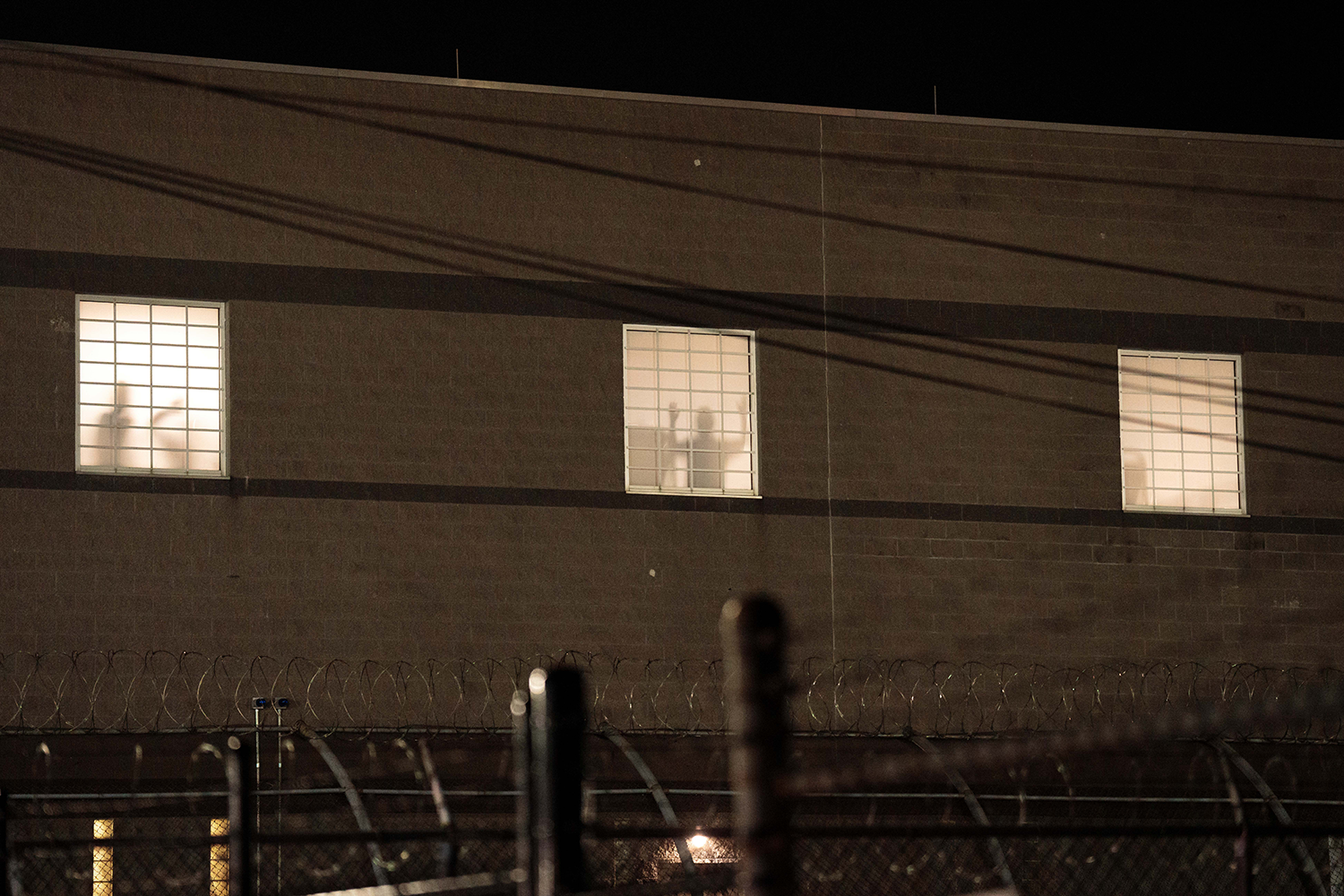
We imagine violence and threat. In practice, most jail admissions are for misdemeanors and public order offenses that track poverty more than danger.
There is a prevailing narrative surrounding local jails – one that is rarely interrogated but constantly shapes public policy. The assumption is straightforward: jails house dangerous individuals, the system operates to keep the public safe, and its massive scale is simply a reflection of serious crime. These ideas provide a reassuring justification for a sprawling system, allowing the mechanics of detention to escape close scrutiny.
When we assume detention is about safety, it feels like a rational, deliberate sorting process where risk dictates who stays and who goes. We accept the churn and the sheer volume of incarceration as evidence of necessity. But a closer look reveals a starkly different reality.
To be clear, some people do pose a genuine threat to public safety and should be detained. The question is not whether detention has a role in the justice system. The question is whether our current jail population reflects actual risk, or whether we have come to rely on incarceration to address a much broader range of social and economic problems.
Jails are not primarily filled with people convicted of serious violence.
Jails are not primarily filled with people convicted of serious violence. They are filled with people navigating a system that treats poverty, addiction, homelessness, missed court dates, immigration status, and unpaid bail as reasons for confinement. And even when the system calls something or someone “violent,” that language often obscures more than it explains, turning broad legal categories into definitive assumptions about character. Once we look past the myth, the scale of American jails looks less like a response to violence and danger and more like a measure of how often we use incarceration to manage instability.
The phrase “violent charge” sounds straightforward, but it encompasses many different realities. Most people hear it and picture the worst: murder, rape, or assault. In the legal system, however, the category is much broader. It can include cases where no one was physically hurt, where a threat was allegedly made, where a weapon was present but unused, or where police and prosecutors filed the most severe version of a charge before testing the facts in court.
The word “violent” often stops people from asking questions.
A charge is an accusation, not a conviction. Yet in public debate, the word “violent” often stops people from asking questions: Was anyone harmed? What does the evidence show? Has the allegation been tested in court? What support would ensure the person returns to court? Does the person pose a current risk to public safety? The label reduces a complicated case to a simple image: a dangerous person who must be isolated. When that happens, we no longer ask whether someone can safely go home before trial. The accusation itself becomes proof.
A similar problem plagues the phrase “violent offender.” The law may describe a charge, an offense, a past conviction, or a judge’s assessment of risk, but these are legal categories. They rarely tell us who a person truly is, what actually happened, or whether they can safely live in their community while awaiting trial. In the public imagination, however, “violent” becomes a permanent identity, suggesting an inherently dangerous person who belongs in jail. That leap matters.
The legal process may begin with an allegation about a single event, but fear turns that allegation into a lifelong judgment. The foundational questions of pretrial justice vanish. Instead, public debate settles on a harsher assumption: people labeled violent do not belong among us. These are not abstract distinctions. They are the difference between seeing a person clearly and allowing a legal label to do all the moral work.
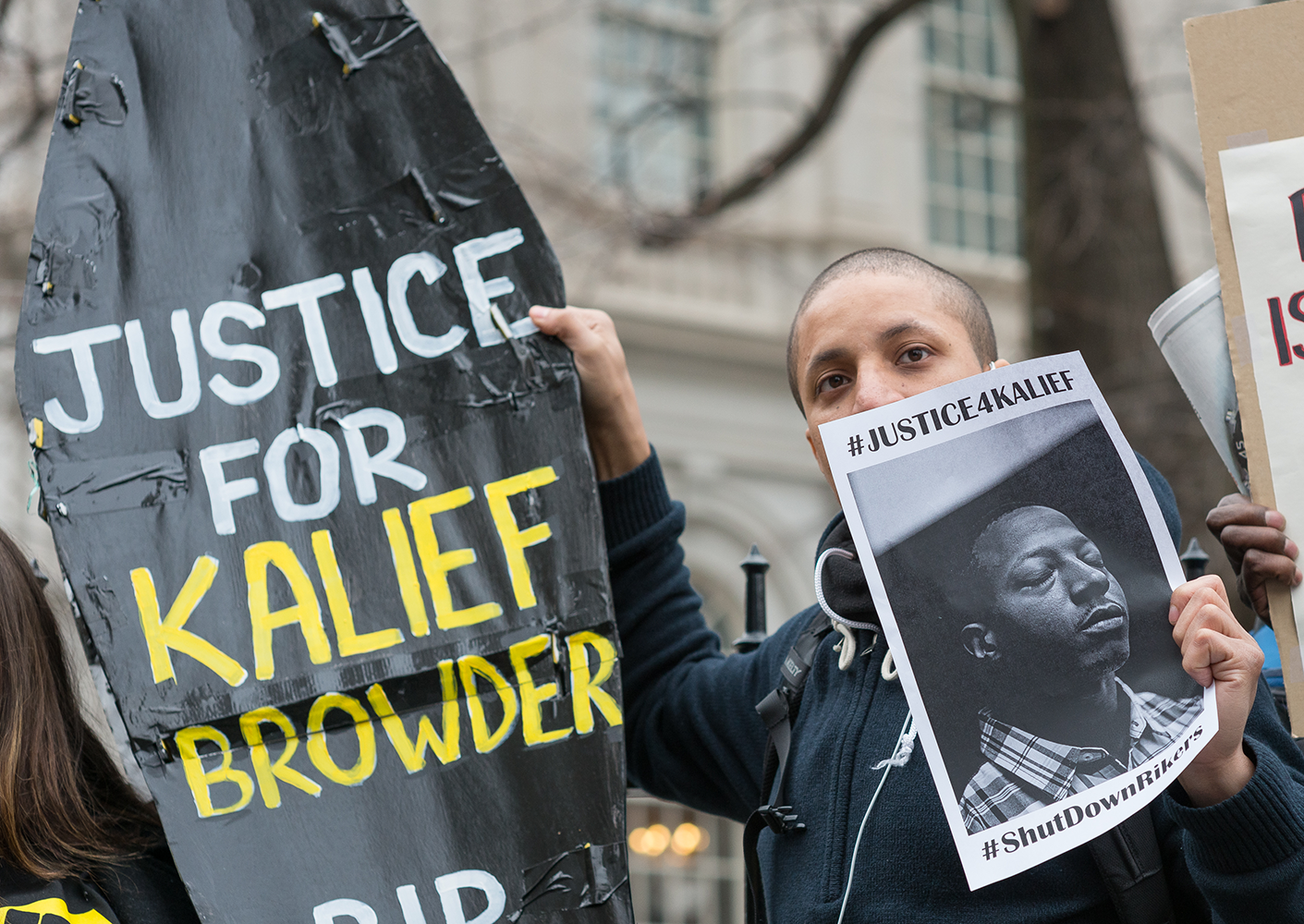
Kalief Browder was not convicted of a serious crime. He was a teenager accused of stealing a backpack.
Kalief Browder was not convicted of a serious crime. He was a teenager accused of stealing a backpack. But because he could not pay the initial bail set in his case, and because the courts delayed his case again and again, the accusation itself became a sentence. He spent more than three years on Rikers Island awaiting a trial that never came. His case remains one of the clearest examples of how pretrial detention can turn poverty into punishment and delay into destruction.
And then there is Lashawn Thompson, a Black man with serious mental illness who was held in the Fulton County Jail’s mental health unit and died in a filthy, insect-infested cell after months of neglect. Thompson’s death shows the deepest failure in the jail system’s logic. A man with serious mental health needs was not made safer by incarceration. The public was not made safer by his deterioration. His jail cell became a substitute for care, and then a site of abandonment.
Together, these cases expose the weakness of the myth. Browder shows how an accusation can become punishment. Thompson shows what happens when mental illness and homelessness are routed through a cage instead of a system of care. None of these stories proves that no one should ever be detained. They prove something more specific, and more damning: that jail is too often used before we have answered the most basic questions. What happened? Who is actually at risk? What would safety require?
Even if we accept the system’s labels at face value – treating every “violent” charge as evidence of serious violence despite the term’s breadth and the absence of a conviction – the larger picture remains unchanged. Violence is not what drives most people into jail. The data points in a decidedly different direction: toward low-level charges, public order offenses, unpaid bail, technical violations, and the everyday realities of poverty.
If you were to watch the 7.9 million people processed through American jail cells every year, you would not see a parade of master criminals. You would see a massive, churning volume of people who are poor, unstable, addicted, unhoused, or simply unable to navigate the labyrinth of the court system. While our national conversation fixates on high-stakes violence, the data shows that most jail admissions stem from lower-level offenses, functioning less as a response to danger and more as a tax on poverty.
The single largest category of charges clogging the system isn’t murder or assault – it is public order offenses.
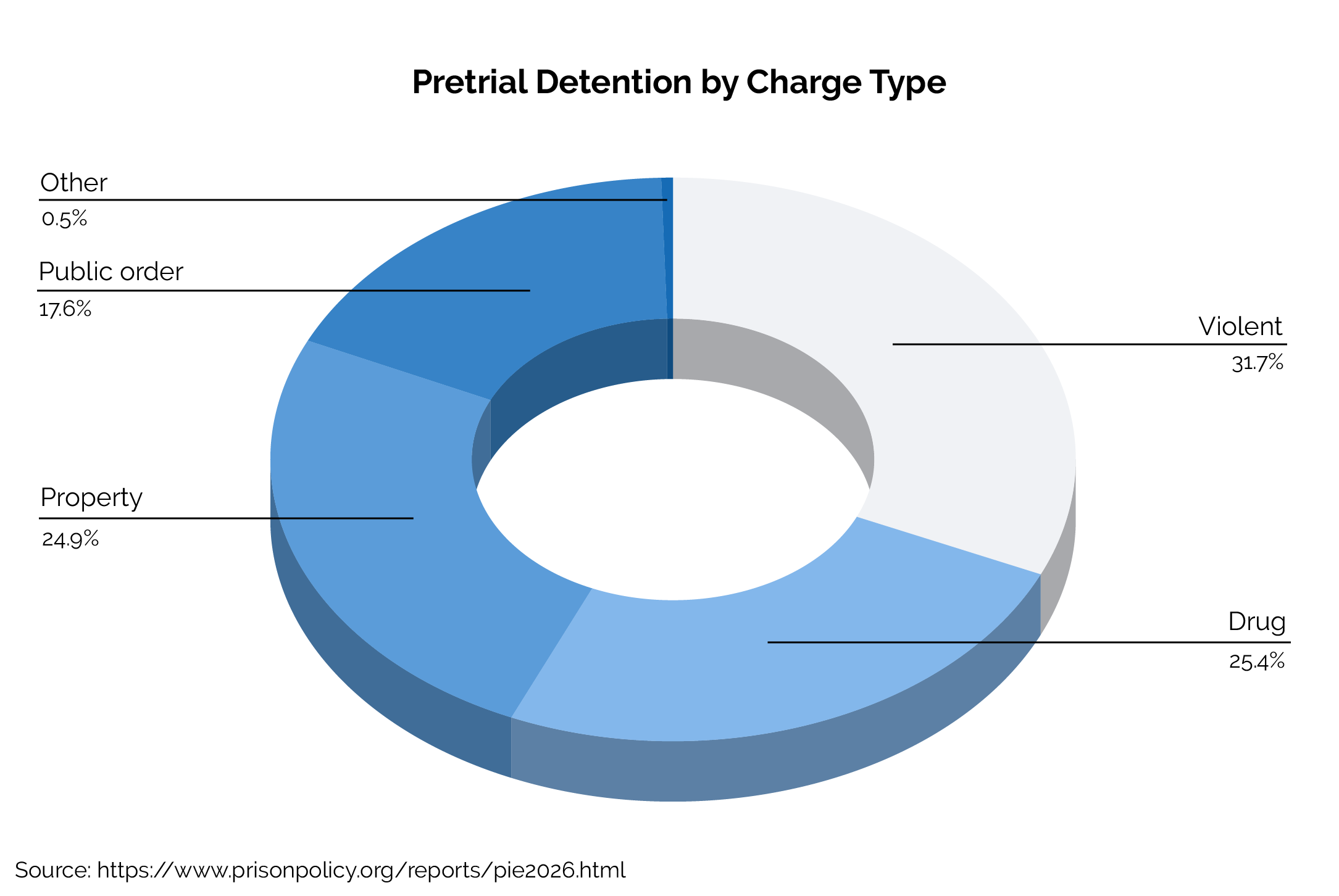
According to the Prison Policy Initiative in its 2026 “Whole Pie” report, the single largest category of charges clogging the system isn’t murder or assault – it is public order offenses. This catch-all accounts for 36% of admissions and often reflects the challenges associated with poverty, housing instability, substance use disorders, and compliance with court requirements. We are talking about trespassing, loitering, and “failure to appear” for a previous court date, which often results in additional incarceration for people who are already struggling to navigate complex court requirements. Violent offenses, despite being the face of every “tough on crime” campaign, represent only about 22% of the total volume of people entering jails. The rest is largely driven by crimes of poverty, with property offenses like larceny and shoplifting making up another 19%, and drug-related charges – primarily simple possession – accounting for 15%.
Perhaps the most important misconception is that jail populations reflect danger. In reality, risk and charge severity are not the same thing. Many people charged with violent offenses never commit another violent act and reliably return to court. At the same time, many of the people who cycle repeatedly through local jails are there because of untreated addiction, mental illness, homelessness, or chronic instability – conditions that are poorly addressed through incarceration alone. If the goal is public safety, the relevant question is not whether a charge carries the label “violent,” but whether detention is actually necessary to prevent harm.
The public safety implications of this distinction are often overlooked. Detention is frequently justified as a necessary tool for preventing future crime, but a growing body of research suggests that unnecessary incarceration can actually undermine public safety. Even short periods of pretrial detention can destabilize employment, housing, family relationships, and access to treatment – factors strongly associated with long-term community safety.
Jurisdictions that have reduced their reliance on pretrial detention offer a useful test of this assumption. New Jersey’s pretrial reforms dramatically reduced its jail population while maintaining high court appearance rates and avoiding the public safety collapse opponents predicted. Washington, D.C. releases the vast majority of people accused of crimes while still achieving strong court appearance rates and low rates of rearrest. These examples do not suggest that everyone should be released. They demonstrate that public safety and lower incarceration are not mutually exclusive goals.
The critical question is not whether some people should be detained. It is whether detention is being reserved for the relatively small number of people who pose a genuine threat to public safety—or whether incarceration has become a default response to problems that could be addressed more effectively in other ways.
The difference between going home and staying locked up often has less to do with danger than with liquidity.
We already have part of the answer. Organizations like The Bail Project pay bail for people who cannot afford it, provide support, and track the outcomes. The result? People still show up to court. They do it without personal financial stakes and without the coercive pressure the system claims is necessary. The courts’ goals are still met, but everything around the defendant changes. Missing a shift does not lead to losing a job; a short disruption does not spiral into a life-altering crisis. It becomes clear that the difference between going home and staying locked up often has less to do with danger than with liquidity.
Beyond the standard criminal code, two specific categories are driving jail populations. First, more people are currently held for supervision violations – such as missing a meeting with a parole officer or failing a drug test – than for actual new crimes. These violations often result in additional incarceration despite the absence of a new criminal offense, contributing significantly to jail populations. Second, local jails have seen a nearly 60% spike in ICE detainees over the last year. Many rural and cash-strapped counties have turned their jails into profit centers, renting out beds to the federal government to hold people for administrative immigration issues alongside those charged with local crimes.
Ultimately, the most common charges in our jails reveal a system that is not primarily catching the bad guys. It is catching people who have fallen through the cracks of every other social safety net, using the blunt instrument of a jail cell to manage problems that require a doctor, a social worker, a court reminder, stable housing, or a living wage.
The real question is not whether dangerous people should be detained. Of course some should. The question is whether public safety is best served by incarcerating hundreds of thousands of people who pose little risk but lack money, stability, or support.
If the goal is safer communities, then the evidence points to a more targeted approach: reserving detention for people who present a genuine threat, while investing in the tools that actually reduce future harm and help people successfully navigate the justice system.
Once we look beyond the myth of who is in jail, the challenge becomes harder to ignore. The problem is not simply that we incarcerate too many people. It is that we often incarcerate the wrong people for the wrong reasons and then mistake the volume of incarceration for safety.
We need your help to secure freedom for people trapped behind bars because of unaffordable bail.
Your support gives hope to the thousands of people still trapped in pretrial detention. We’ve supported more than 40,000 clients through free bail assistance and community-based support services like affordable housing and healthcare, and mental health services. You can help secure the freedom of thousands more.
The Bail Project is a 501(c)(3) nonprofit organization that is only able to provide direct services and sustain systems change work through donations from people like you.