


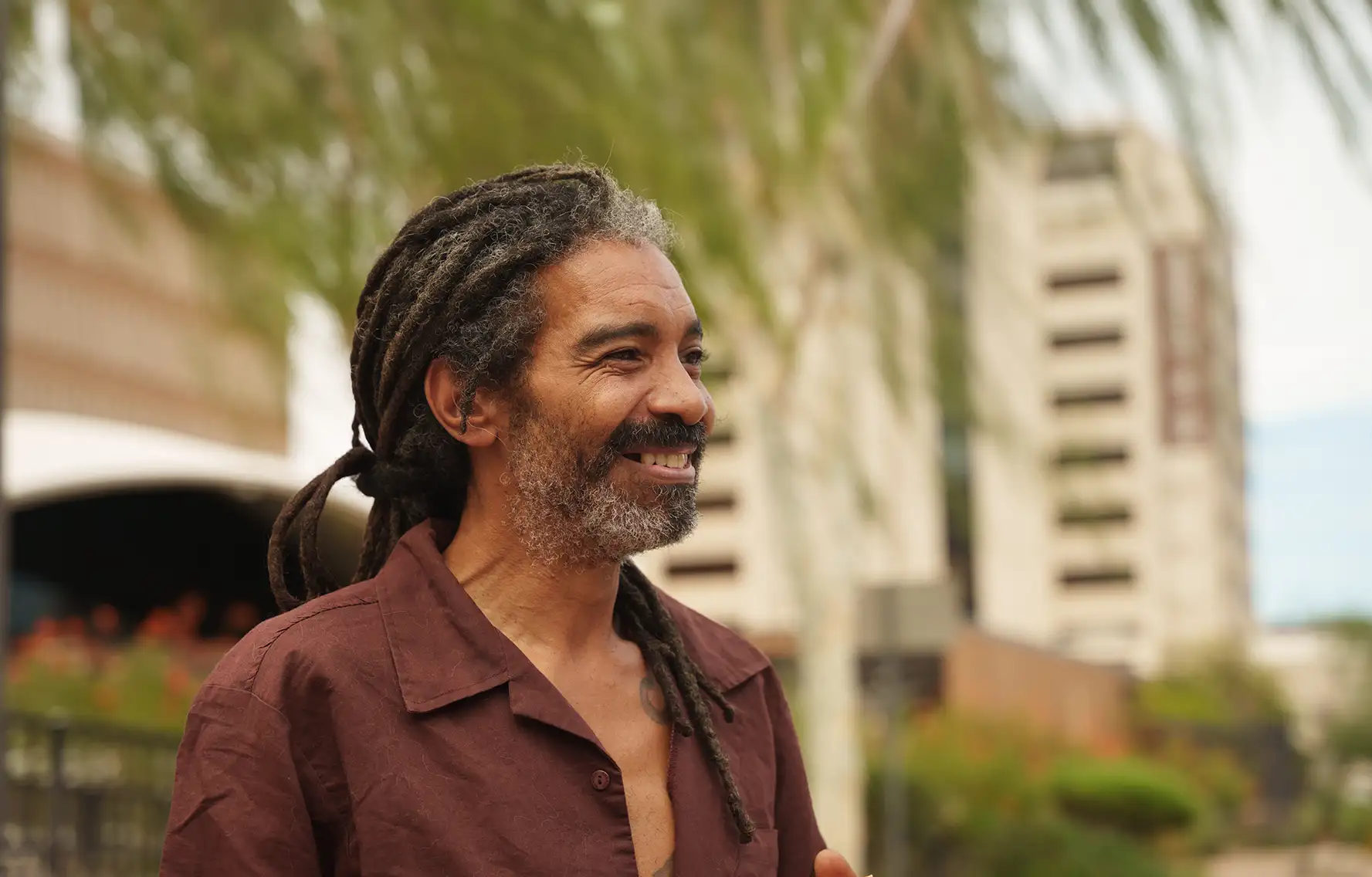
After an arrest left him detained before trial, Terry lost his home, his tools, and the animals who traveled with him.
Terry says he spent years building a life that didn’t belong to him. At 48, the former electrician describes himself as a “journeyman for real” – a nomad who traded the constraints of traditional employment for a truck, a trailer, and a small family of cats. He calls his journey a quest for “unprogramming,” a way to live in remote landscapes where he could finally escape the feeling of being constantly monitored and controlled.
The very system Terry sought to outrun caught up with him in a retail parking lot.
But last December, the very system Terry sought to outrun caught up with him in a retail parking lot.
What followed was 13 days of pretrial detention in a county jail system, the loss of his animal companions, and a $2,500 bail that functioned as a wall between his nomadic freedom and a cell.
Terry’s story does not begin with a crime, but with a visit. He was passing through the area, resting for the night, when a friend stopped by his trailer. He had parked in a large lot, intending to stay only long enough to recover for the next leg of his trip.
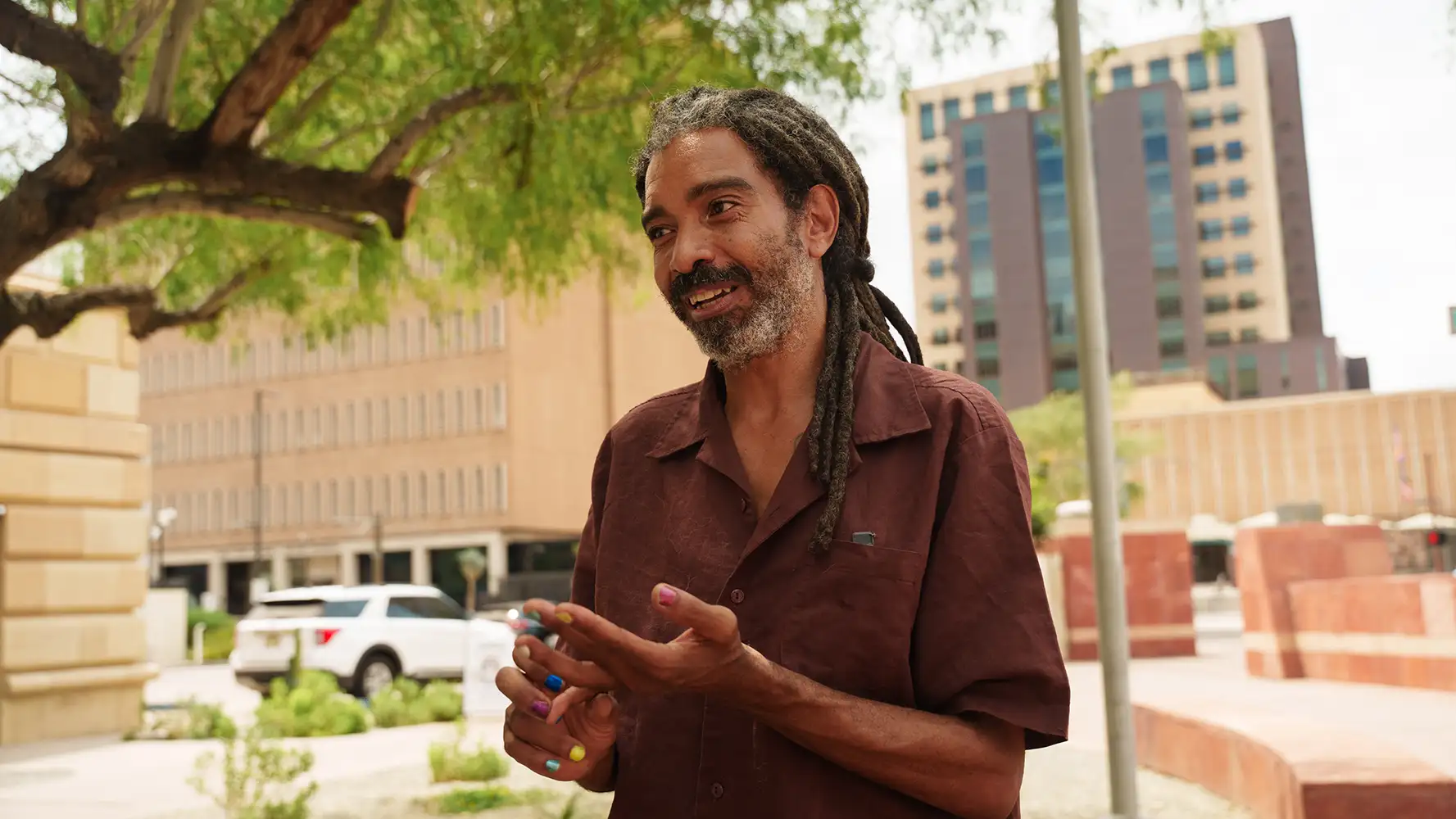 The next day, a security guard approached him. Terry says he was told he couldn’t stay overnight, but he wasn’t ordered to leave that second. As he began packing his trailer to comply, the police arrived.
“I’m getting ready to walk out my door to go take off,” Terry recalled. “The police come by… they were like, ‘You need to step outside,’ and I’m like, ‘Hold on, you yelling and screaming at me. You could ask me.’”
Terry says he was thrown to the ground, kicked in the chest, and pepper-sprayed while pinned to the pavement.
Terry’s philosophy of independence – his desire to be spoken to as a man rather than commanded as a subject – clashed instantly with the officers’ approach. The situation escalated into violence. Terry says he was thrown to the ground, kicked in the chest, and pepper-sprayed while pinned to the pavement.
Despite being face-down and unable to see, he was charged with trespassing, resisting arrest, and assault on an officer.
The arrest took more than Terry’s liberty; it dismantled the fragile stability of his life on the road. In the chaos of the encounter, his two cats – Pearl Feather and her son, Nora – were lost. “I’ve had cats for about four years,” he said.
While Terry sat in jail, his trailer was left in the care of others, and many of his belongings were stolen. This is the “second sentence” of pretrial detention: the destruction of property and support systems before a person has even been convicted of a crime.
 Inside the jail, Terry encountered the very “power trips” he had spent years trying to avoid. He described the food as little more than meager rations.
“They feed you twice a day,” he explained. “A bread roll, peanut butter, four little cookies, and one packet of jelly. At dinner, it might be rice and…slop basically.”
The environment was defined by a lack of basic respect. Terry watched younger officers treat people with a total lack of empathy, demanding absolute compliance in exchange for basic needs.
Like many others in pretrial detention, Terry felt the pressure of the “plea deal assembly line.”
Like many others in pretrial detention, Terry felt the pressure of the “plea deal assembly line.” He says he was told he was likely to lose and urged to take a plea – even though he insisted the police reports were inaccurate and that essential body camera footage was being withheld.
“They want me to play a game with them,” Terry said. “And I don’t like the games they want me to play.”
With his bail set at $2,500, Terry was trapped. In the American legal system, access to money determines who can fight their case from home and who must choose between their rights and their freedom.
While in court, another incarcerated person told him about The Bail Project. Terry only remembered one phone number by heart: his father’s. He called home, his father reached out to the organization, and soon Terry was speaking with a bail disruptor. Within days, The Bail Project posted his bond.
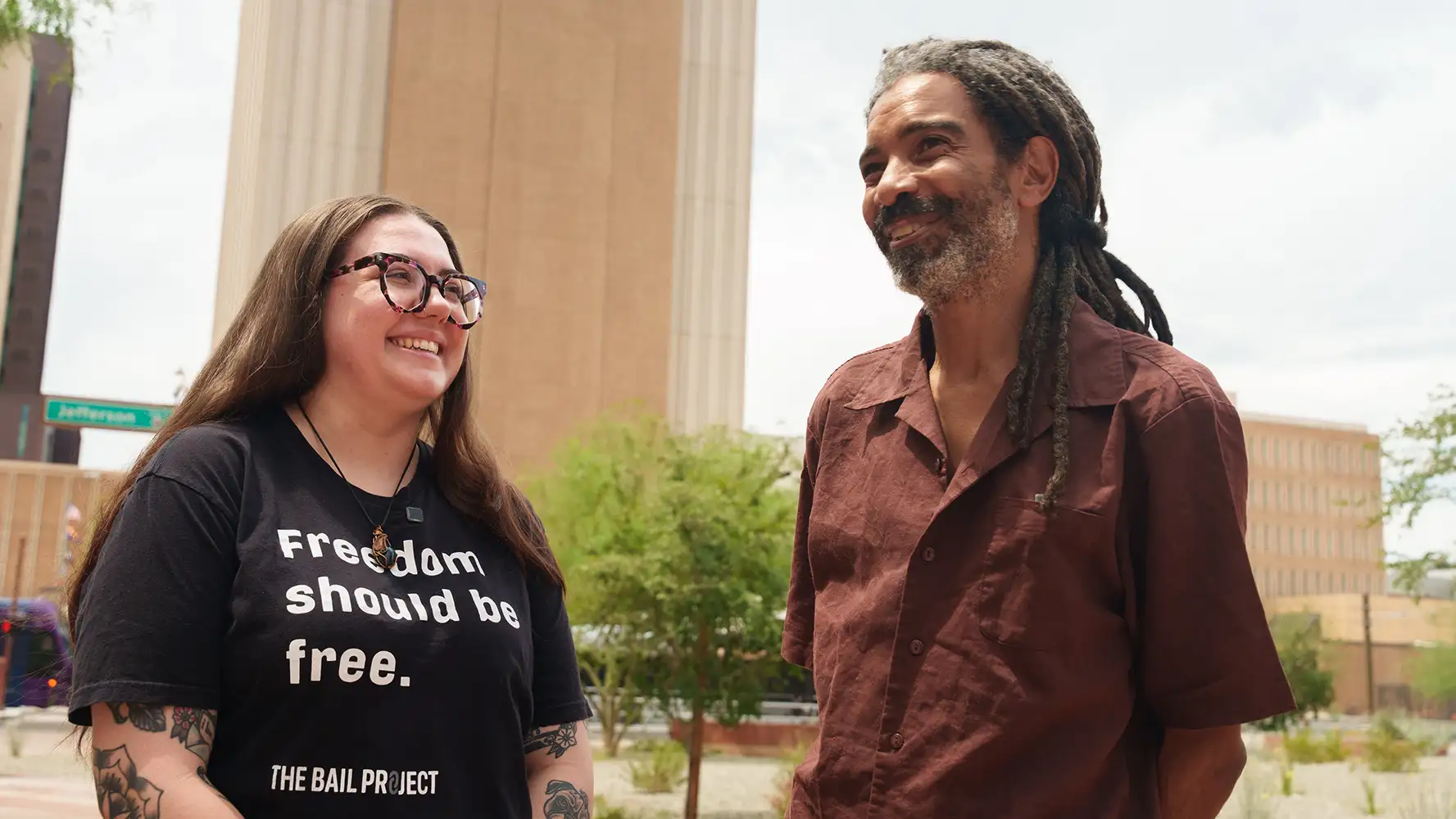 Freedom has not meant a return to normalcy. Terry is currently restricted in his movements while his case moves forward. He is fighting to regain his sense of peace while mourning the loss of his cats and his stolen belongings.
He spends his time reflecting on the “lessons” he is meant to learn, practicing “emotional mastery” so that he can remain calm even when faced with the “commands” of the state. He still believes in his right to travel, even if the state now requires him to ask for permission.
“I don’t owe anybody an explanation as to how I actually live my life,” he says.
Terry’s experience is a reminder that for those living on the margins, the pretrial system is not a neutral waiting room.
Terry’s experience is a reminder that for those living on the margins – the nomads, the seekers, and those without permanent addresses – the pretrial system is not a neutral waiting room. It is a place of profound loss, where a $2,500 price tag can cost a person their things, their family, and their dignity.
“I’m trying to figure out if I’m still stuck in the Matrix,” Terry said. “But I’m still on my journey.”
We need your help to secure freedom for people trapped behind bars because of unaffordable bail.
Your support gives hope to the thousands of people still trapped in pretrial detention. We’ve supported more than 40,000 clients through free bail assistance and community-based support services like affordable housing and healthcare, and mental health services. You can help secure the freedom of thousands more.
The Bail Project is a 501(c)(3) nonprofit organization that is only able to provide direct services and sustain systems change work through donations from people like you.