


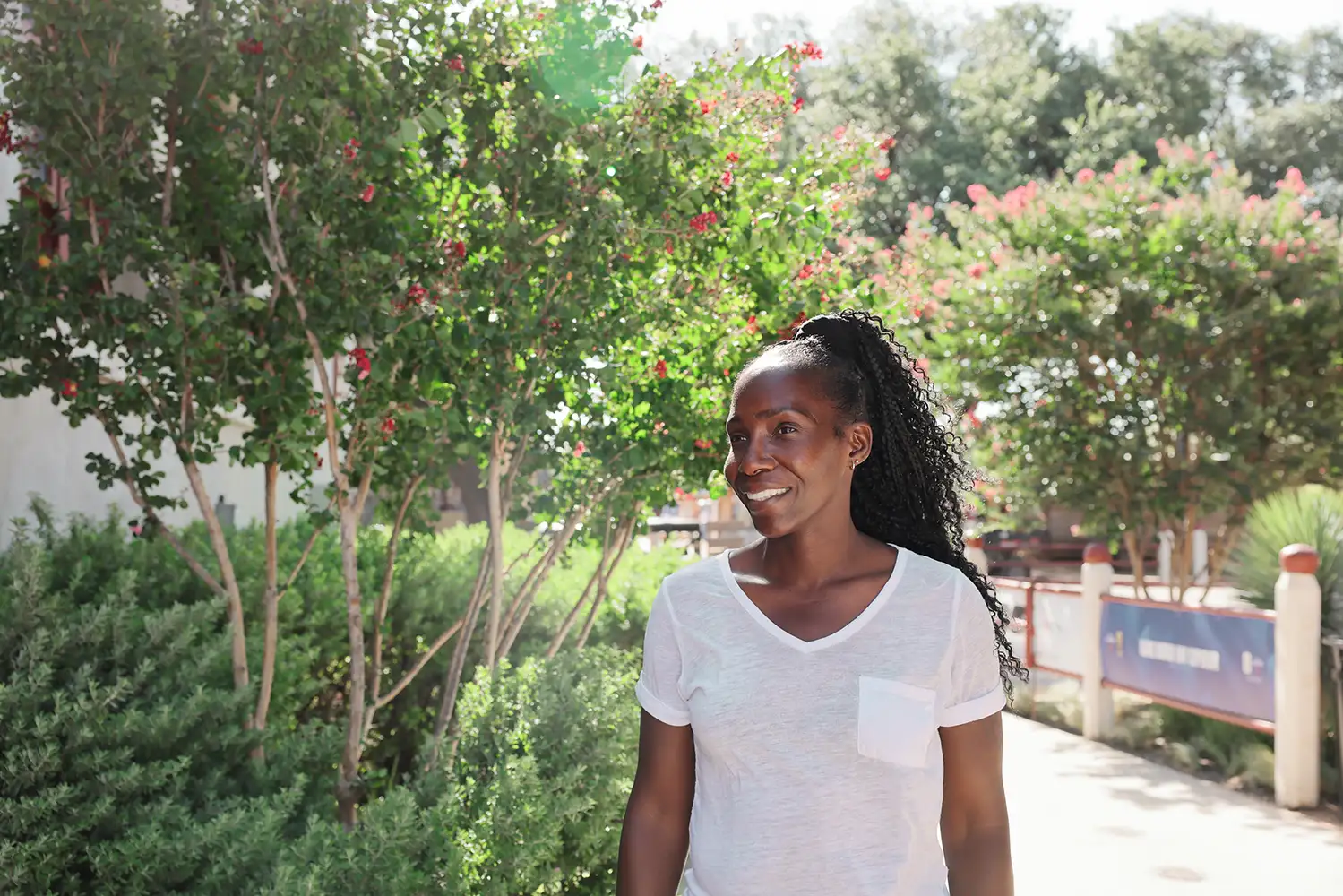
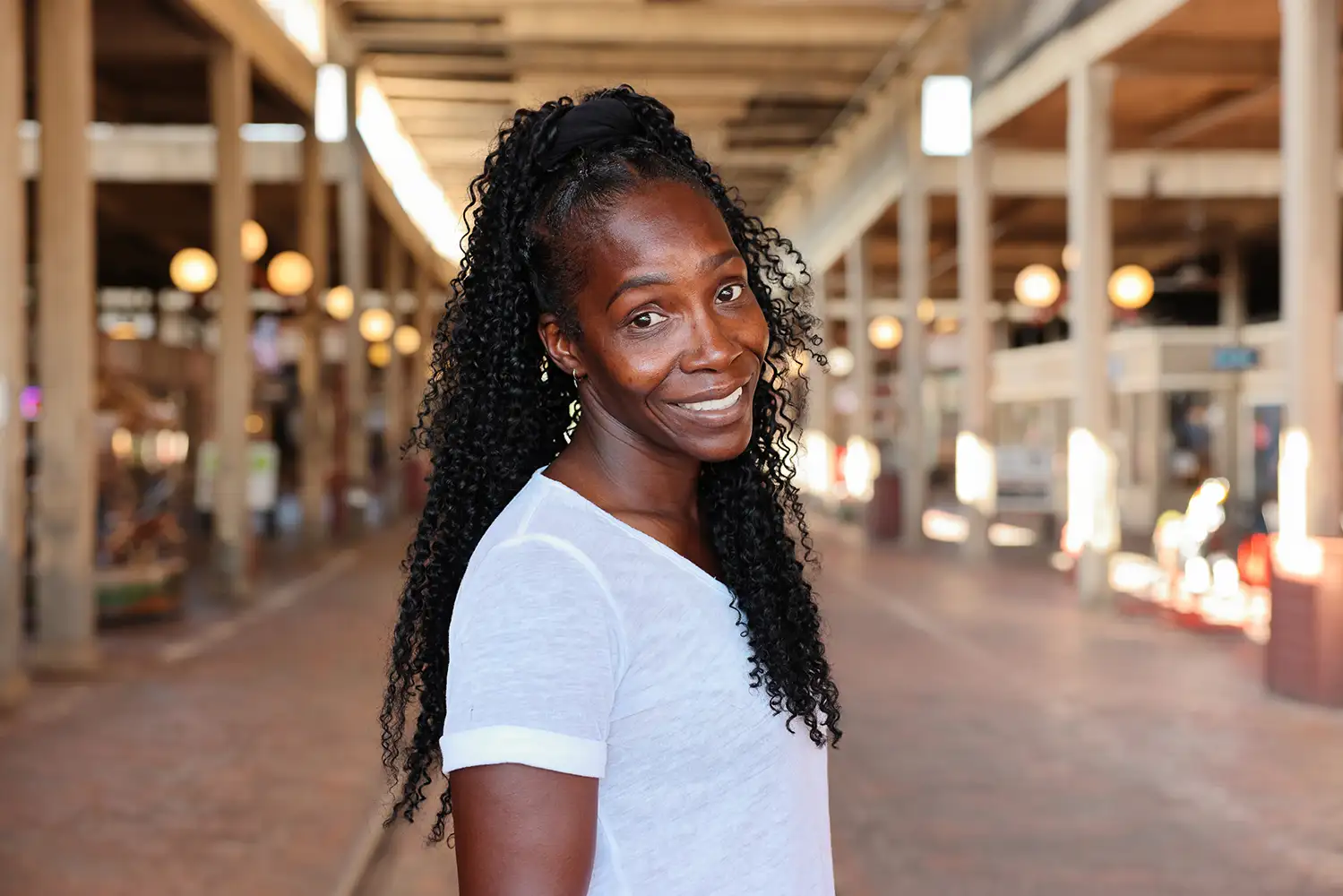
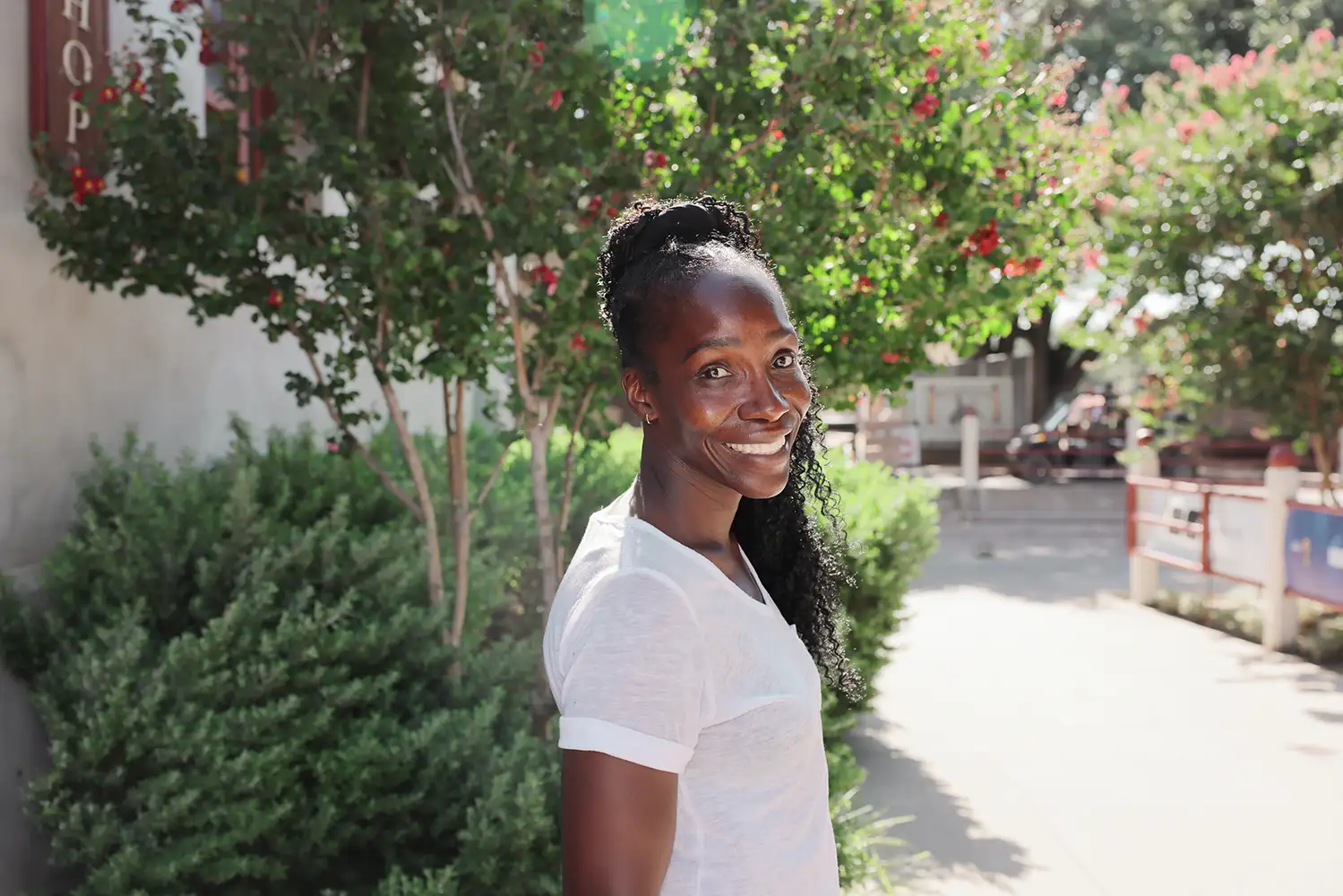
With warrants and no money for bail, Jacqueline avoided court to avoid jail and separation from her children. Legal and bail support enabled her to resolve her case in hours instead of weeks.
Jacqueline reached a point where turning herself in could mean losing her children.
She had multiple warrants in Tulsa, Oklahoma – two assault cases and a failure-to-pay charge. To resolve them, she would likely have to go to jail first.
She did not have money for a lawyer. She did not have money for bail.
She did not have money for a lawyer. She did not have money for bail. And she had no one who could take care of her children if she were detained.
“I got hit with a crossroads,” she said. “Take my kids to [Oklahoma Department of Human Services] custody, or try to handle my stuff some other way.”
Her life was already unstable. In 2021, her husband died after a stroke. Soon after, she received a 30-day notice to leave her home. She was moving between places, trying to keep her children housed, while dealing with legal problems that had been building for years.
 One of those problems dated back to 2015. Jacqueline spent about 45 days in jail on a case she said she did not believe she was guilty of. But after weeks inside, the goal shifted from fighting the case to getting out.
“I said, I don’t care what it is. I plead guilty, whatever, I’ll go home,” she said.
She described 23-hour lockdowns, limited food, and constant pressure. The experience pushed her to accept a conviction just to leave. That decision stayed on her record and affected her for years.
By 2021, new charges added to that history. One came from a confrontation while trying to retrieve her 13-year-old daughter, who she said was using drugs and moving through unsafe spaces. Another came from stepping into a conflict involving her sister. She was told to return to court with a lawyer.
She did not have one. So she did not go back.
Without money, turning herself in would mean jail time.
That decision triggered warrants. Over time, the cases stacked. She estimated her bail at around $4,000, which she did not have – not even $400, the 10% non-refundable fee a licensed bail bonds agent would charge to bail her out. Without money, turning herself in would mean jail time.
“I knew if I went into court, I would have been going to jail for God knows how long,” she said.
Not going meant living with warrants that shaped everything else. She could not apply for stable housing. Jobs were harder to secure. Movement was restricted. The cases followed her as she moved between cities.
At one point, she considered turning herself into a police officer just to end the uncertainty.
“I just want to flag him down and say, ‘Come take me,’” she said.
But she could not take that risk. Her children depended on her, and she had no one else to step in.
 The situation changed when she began searching for help. Sitting in her car, trying to figure out how to resolve her warrants without losing everything, she looked up programs on her phone and found Still She Rises, an organization that offers legal representation to mothers in both the criminal and civil legal systems. Through that program, she was connected to legal representation and to support through The Bail Project, which paid her bond.
“When I got to the bail part, that’s the part I was worried about… [The Bail Project] already had that lined up,” she said.
With support in place, she was able to do a walk-through – turning herself in under controlled conditions, with legal representation ready. She was away from her children for about two hours.
“Instead of going…and figuring out where my kids were going to go…I was only away from my kids for maybe about two hours max,” she said.
Her cases were ultimately dismissed.
The effect was immediate. Once the warrants were cleared, her record was eventually cleared. She found steady work, including driving for UPS.
“I was able to acquire housing almost immediately after,” she said.
Without that intervention, she believes she would still be stuck – unable to move forward or provide stability for her children.
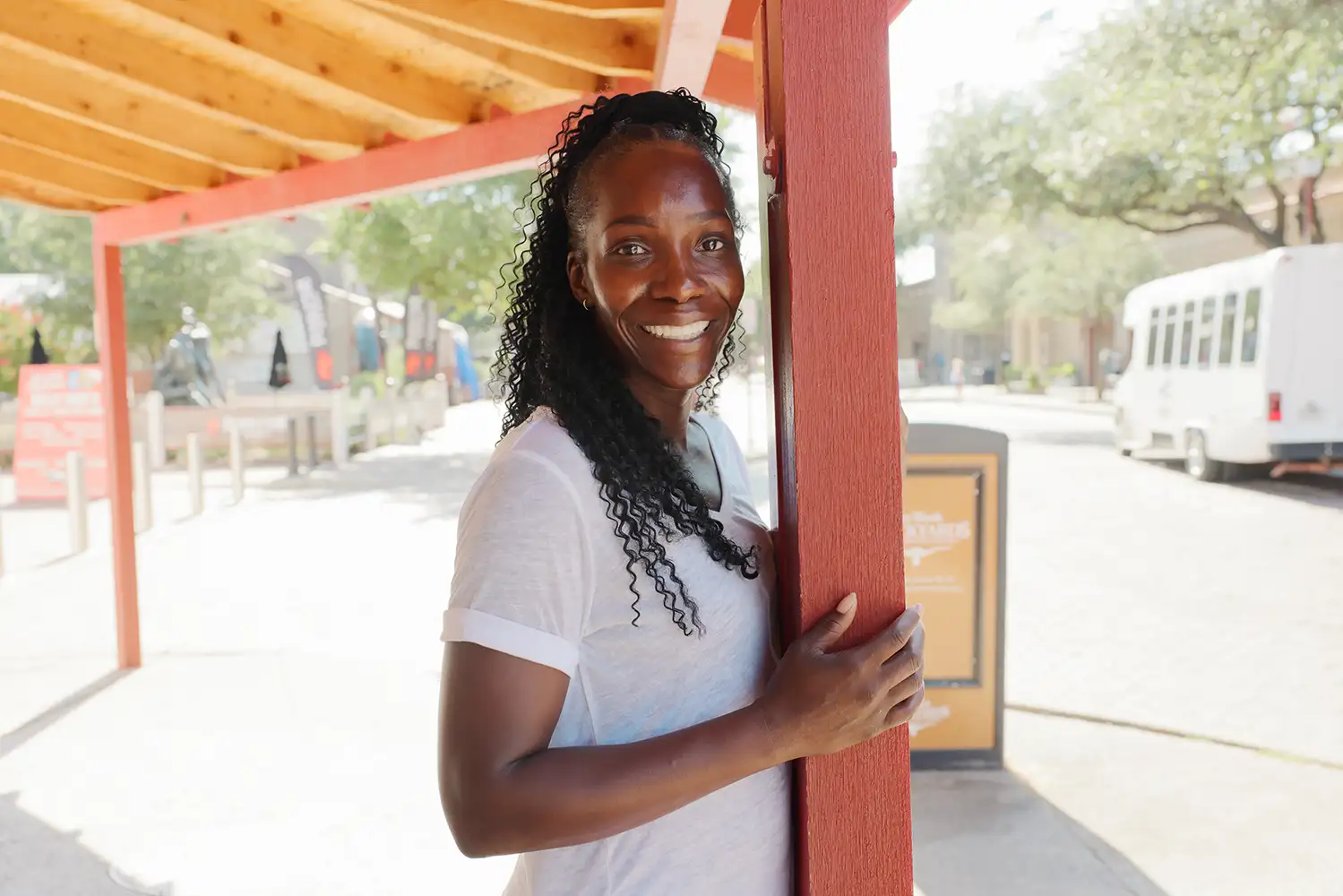 “I’d probably still be running around here, can’t apply for anything…can’t get any housing,” she said.
Her experience reflects a broader pattern. When people cannot afford bail or legal representation, they sometimes delay resolving cases or avoid court altogether, which can lead to warrants and deeper instability. When they are jailed, even briefly, the pressure to plead guilty increases, regardless of the strength of the case.
Jacqueline has lived both sides. In 2015, she took a plea after weeks in jail. In 2021, with support and without detention, her cases were dismissed.
The difference was not the charges. It was the conditions under which she was able to fight them.
What changed was not just the outcome of her case. It was what she was able to preserve in the process: her housing, her job prospects, and custody of her children.
What changed was not just the outcome of her case. It was what she was able to preserve in the process: her housing, her job prospects, and custody of her children.
She now works, maintains a home, and is raising her kids. The progress is ongoing, but stable.
“It might not seem big to most people,” she said, “but…those are things I need for my kids.”
The difference is that she was able to resolve her case from a position of freedom.
We need your help to secure freedom for people trapped behind bars because of unaffordable bail.
Your support gives hope to the thousands of people still trapped in pretrial detention. We’ve supported more than 40,000 clients through free bail assistance and community-based support services like affordable housing and healthcare, and mental health services. You can help secure the freedom of thousands more.
The Bail Project is a 501(c)(3) nonprofit organization that is only able to provide direct services and sustain systems change work through donations from people like you.