







Published in In These Times to coincide with America’s 250th anniversary, Director of Communications Jeremy Cherson argues that the modern cash bail system has corrupted the founding principle of pretrial liberty by conditioning freedom on wealth rather than risk. Framing this milestone as a time to confront the unfinished promise of American democracy, he highlights how mutual aid organizations and successful bail reforms prove that community support is a far more effective way to ensure court appearances and uphold due process.
Read the op-ed below and on In These Times‘s website.
It was a chilly spring day when Nicole, now a 31-year-old medical social worker in Tulsa, Oklahoma, opened an unsolicited letter from a criminal defense attorney. The letter informed her that she had been charged with a felony and might have a warrant for her arrest.
Nicole had never had a run-in with the law. A single mother of three, she had spent her career helping others navigate the very systems she now found herself caught in. An eyewitness to a robbery had identified her as a suspect. Soon after, she was formally charged. A judge set her bail at $50,000.
For most people, that amount is insurmountable. A third of Americans cannot access $400 in an emergency. Nearly one in five would struggle to cover a $100 unexpected expense. Fifty thousand dollars might as well be a million.
If Nicole could not pay, she would remain in jail while her case moved through the courts — a process that can take weeks or months. She would lose her internship, jeopardizing her master’s degree. She might lose her job, her home, even custody of her children. And she would be forced to fight her case from inside a jail cell.
What happened to Nicole is often described as a failure of the system. In reality, it reflects how the system is designed to function — one that conditions freedom not on risk or responsibility, but on access to money.
Nearly 250 years after the country declared liberty as a founding principle, the gap between promise and practice remains embedded in how freedom itself is distributed.
From promise to price
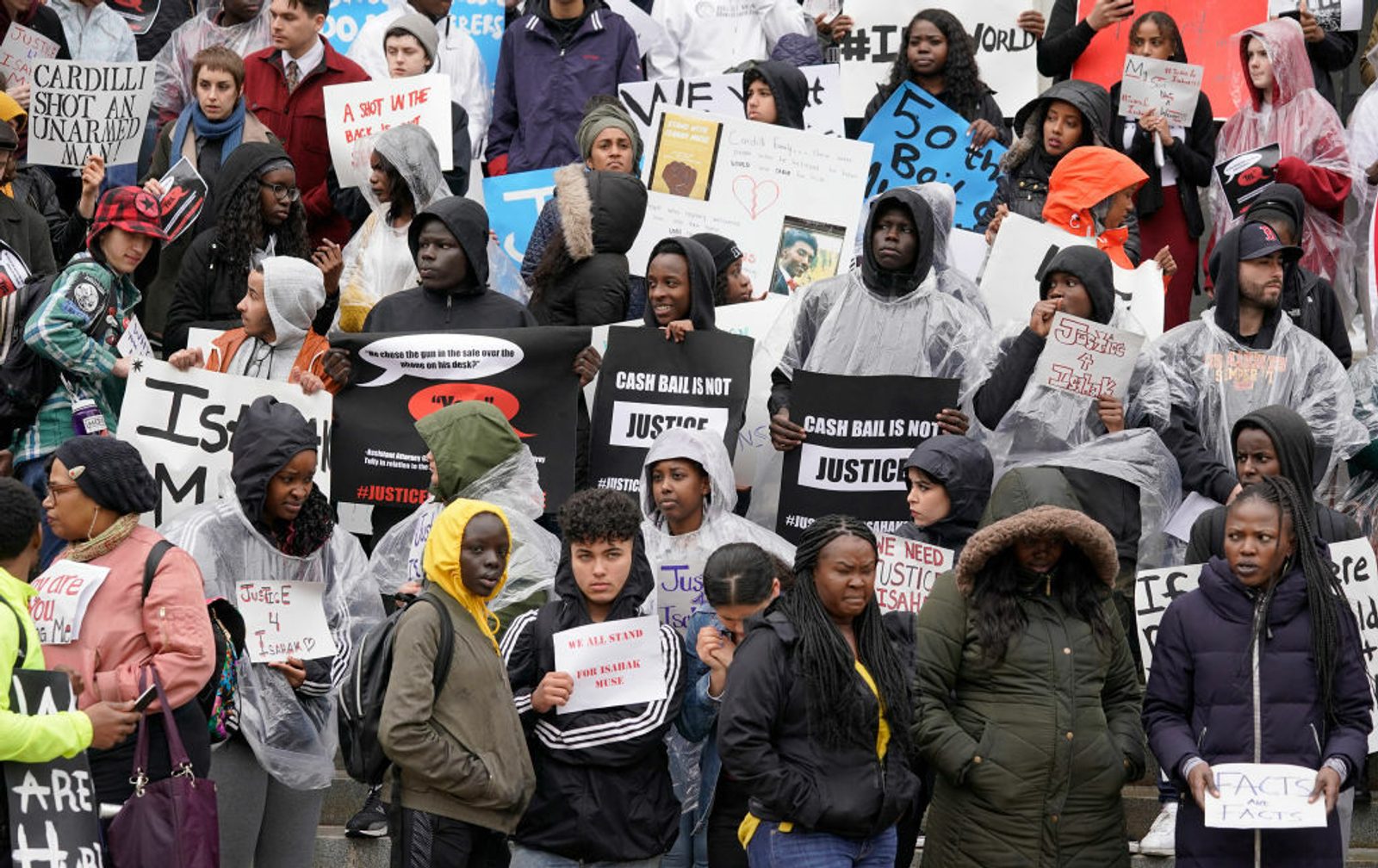
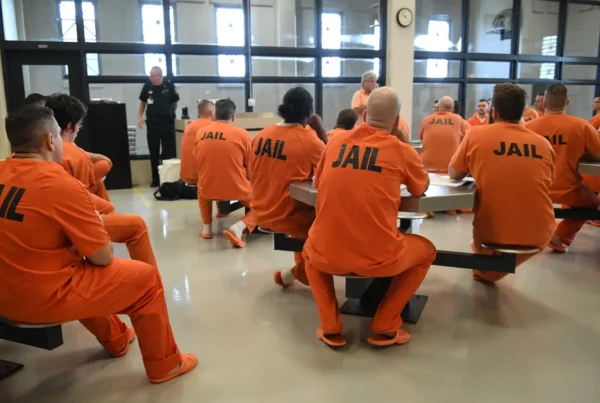
On any given day, nearly half a million people in the United States sit in jail awaiting trial — not because they have been convicted of a crime, but because they cannot afford to pay for their release. In practice, freedom before trial often depends less on risk than on access to money.
Cash bail is often described as a tool to ensure that people return to court. In reality, it functions as a sorting mechanism: those who can pay go home; those who cannot remain in jail.
This was not always the case.
In the early years of the United States, the idea of bail was simple: if you were accused of a crime, you would go free. The presumption was not that you belonged in jail, but that you belonged in your community — working, caring for your family, preparing your defense — unless the government could show a very specific and compelling reason to detain you. In most cases, that meant only the most serious charges. This is how the system is meant to function: the deprivation of liberty for a legally innocent person should be rare, carefully limited, and difficult to justify. Even then, the requirements for keeping someone detained were strict and difficult to satisfy.
This principle was not invented in the United States. It was inherited from English common law and written into state constitutions across the country in near-identical language:
“All persons shall be bailable… except for capital offenses, when the proof is evident or the presumption great.”
At its core, the right to bail was not about money. It was about freedom.
Nearly 250 years later, that meaning has been transformed. Over time, that principle was reshaped. Courts began to replace promises from family and neighbors with financial conditions. Instead of asking who would stand behind someone, they asked how much money they could produce. What had been a safeguard of liberty became a transaction.
This transformation introduced a fundamental inequity into the system. When release depends on money, detention no longer reflects a considered judgment about safety or likelihood of return to court — it reflects a person’s financial circumstances. Those with means can secure their freedom, even when risk is present. Those without means remain behind bars, even if they pose no risk at all.
The people most affected by this system — disproportionately low-income, and often from communities historically excluded from full participation in American democracy — are rarely centered in how the system is described.
Today, many people assume that bail is synonymous with money — that paying for release is the natural order of things. But historically, it is the exception, not the rule.
As money bail became the dominant form of release, another shift followed: the expansion of pretrial detention.
Originally, detention was meant to be rare, limited to the most serious cases. But over time, states widened that exception. These changes accelerated during the “tough-on-crime” era of the 1980s and 1990s, when constitutional and statutory reforms expanded the scope of pretrial incarceration.
The result is the system we see today: one that relies heavily on money to determine who goes free, often resulting in detention driven more by financial circumstances than by a clear assessment of risk.
The system does not simply reflect inequality — it produces it.
The consequences are not abstract. Legally innocent people lose jobs, housing, and custody of their children while awaiting trial. Even short periods of detention can destabilize lives in ways that shape case outcomes and long-term trajectories. In this way, the system does not simply reflect inequality — it produces it.
Mutual aid and the work of democracy
Bail funds respond to this reality with a simple premise: no one should be in jail because they are poor.
At The Bail Project, we pay bail for people who cannot afford it and provide basic support — court reminders, transportation, and connections to services — to help them navigate the pretrial process. When cases are resolved, most of the bail money is returned and can be used to help someone else.
But bail funds are about more than financial assistance. They are part of a long and deeply rooted tradition of mutual aid in the United States.
Bail funds are part of a broader movement — one that spans organizers, advocates, and community institutions working to redefine what justice looks like in practice.
Throughout this country’s history, communities have come together to meet urgent needs and expand the meaning of democracy. Enslaved people formed networks to support one another and secure freedom. Freed Black Americans pooled resources to build institutions. Mutual aid societies among immigrant communities provided care in the absence of public systems. The Black Panther Party organized free breakfast programs. During the AIDS crisis, queer communities built health infrastructure when government response lagged. After Hurricane Katrina, volunteers rebuilt homes and schools. During the Covid-19 pandemic, neighbors delivered food and medicine to those in isolation.
These efforts were not acts of charity alone. They were acts of civic participation — ways of making real the promises that institutions had yet to fulfill.
Bail funds belong to this lineage. They are a form of collective care rooted in shared values: equality under the law, the presumption of innocence, and the fundamental right to liberty.
For Nicole — the medical social worker facing a felony charge based on a mistaken eyewitness — a $10,000 bail was just as insurmountable as the original $50,000. Despite the reduction, her freedom still had a price she couldn’t pay. The Bail Project paid her bail. She returned home to her children. She continued her education. She was able to fight her case from a position of stability. Eventually, the charges against her were dismissed.
I often think about another client, Robby, who had struggled with addiction. After his release, he reached out in a moment of crisis and was connected to care instead of returning to jail. Today, he is employed, housed, and rebuilding his life.
Stories like Nicole’s and Robby’s are often framed as exceptional. They are not. They reflect a broader truth: when people are given stability and support, they are better able to meet their obligations, address challenges in their lives, and participate in their communities.
The data bears this out. Across tens of thousands of cases, people supported by The Bail Project return to court at high rates, even without financial incentives. Research consistently shows that simple interventions — like court reminders, transportation, and voluntary services — are more effective than money in ensuring court appearance.
The idea that money is necessary to produce accountability is not supported by evidence. What works is support.
A different path is already taking shape
Across the country, jurisdictions have begun to move away from wealth-based detention — experimenting with new approaches that center fairness, due process, and evidence rather than money.
As the United States approaches its 250th anniversary, the question is not only what rights exist on paper, but how they function — and who ensures they are real.
These efforts are not isolated. They are part of a broader movement that has gained momentum over the past decade, spanning states with very different political and legal traditions.
In Illinois, lawmakers eliminated cash bail and replaced it with a system that requires courts to use the least restrictive conditions necessary and to base detention decisions on clear legal standards. Early data shows that pretrial incarceration has declined without the predicted harms to public safety.
In New Jersey, sweeping reforms shifted the state away from a money-based system, towards a risk-based system, resulting in a significant reduction in its pretrial jail population while maintaining high rates of court appearance.
In Washington, D.C., where cash bail has long been rare, the vast majority of people are released before trial without financial conditions and most return to court without incident. Most return to court, and rearrest rates remain low, including for serious offenses.
Other jurisdictions have taken more incremental steps: requiring courts to consider a person’s ability to pay, strengthening due process protections at bail hearings, or establishing presumptions of release for lower-level offenses. While these reforms vary in design and effectiveness, they share a common aim: to reduce unnecessary detention and move away from a system that conditions freedom on wealth.
The results have not been uniform. Some reforms have faced implementation challenges. Others have been weakened or rolled back under political pressure. In some cases, attempts to reduce reliance on cash bail have led to unintended increases in detention, particularly where legal standards remain unclear or judicial discretion is left unconstrained.
But taken together, these efforts tell a different story than the one often reflected in public debate.
They show that change is not only possible — it is already underway.
More importantly, they offer a set of lessons.
Where reforms have been most effective, they have done more than just stop the reliance on money; they have built a new infrastructure for justice. Success didn’t come from simply ending cash bail — it came from replacing a financial hurdle with a support system. These jurisdictions paired clearer legal standards and strong due process with practical tools like court reminders and transportation. In doing so, they treated release not as an absence of detention, but as a commitment to making sure someone’s return to court was actually workable in their real life.
The work ahead
Bail funds are, in one sense, a temporary solution. They address the harms of a system that should not exist in its current form. The ultimate goal is to replace wealth-based detention with a system that reflects the principles this country claims to uphold.
But they also point to something more enduring.
They show that communities are capable of building systems of care, accountability, and support that are more effective — and more just — than those they replace.
They remind us that democracy is not only defined by laws and institutions, but by the ways in which people come together to make those laws and institutions real.
In that sense, bail funds are not only a response to system failure — they are a form of civic resistance to it.
As the United States approaches its 250th anniversary, the question is not only what rights exist on paper, but how they function — and who ensures they are real.
The right to bail sits at the center of that question.
It is a measure of whether the presumption of innocence is lived or symbolic. It is a test of whether justice depends on evidence or on wealth — and whether freedom before trial is treated as a right or a commodity.
If the founding promise was that liberty would be the norm and detention the exception, the challenge now is not simply to remember that principle, but to decide whether we are willing to rebuild it — and whether we will learn from the places that already have.
Freedom should be free.
Photo credit: Gregory Rec/Portland Portland Press Herald via Getty Images
Thank you for your valuable attention. The urgency and complication of the cash bail crisis requires meaningful participation to create real change – change that is only achieved through the support of readers like you. Please consider sharing this piece with your networks and donating what you can today to sustain our vital work.





Inquest: “How the War on Drugs Packed Jails”