


ANNUAL REPORT
2026
ANNUAL
REPORT
Our mission is to end cash bail and create a more fair, just, and humane pretrial system.
We envision an American criminal justice system where people are treated equally and money has no role in freedom in order to create a safer, fairer, and healthier society.

Message from the CEO
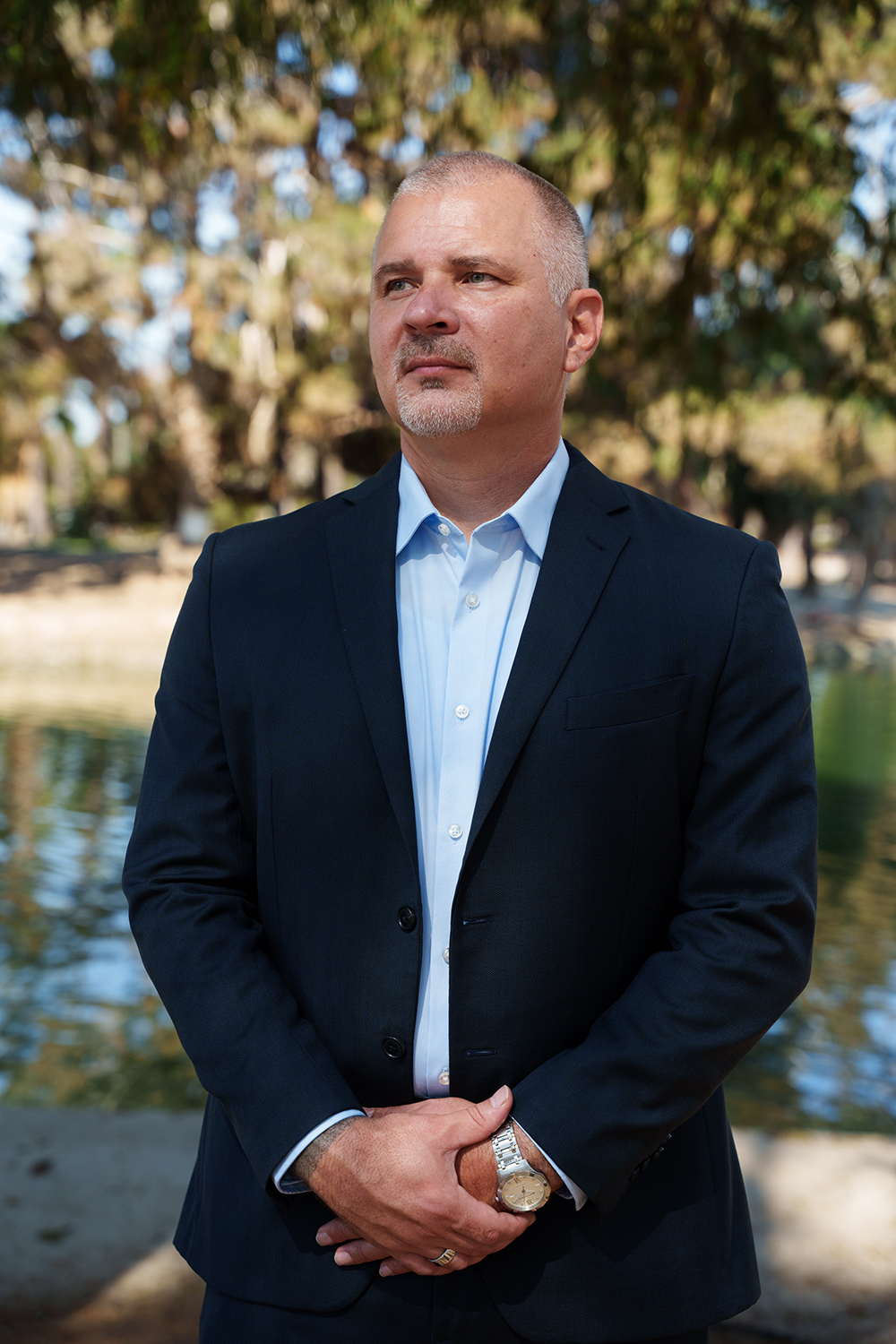 Growing up, my family struggled financially. I remember sharing a set of purple and pink sneakers with my mother because she could not afford to buy me my own pair. I looked forward to the days when we had chocolate-covered rice cakes in our food bank bag. We didn’t call it an affordability crisis. It was just life.
Today, rising costs are impacting families across the country more than ever. At the same time, we are seeing renewed efforts to expand pretrial incarceration and move away from reforms that made our justice system safer and fairer. For families already stretched thin, cash bail adds another cost they can’t afford.
This year, The Bail Project met this crisis on multiple fronts. We brought people home and supported them after release. We launched the National Bail Table with our partners, challenged harmful policy changes, and produced research that exposed growing threats to pretrial freedom.
These may look like different parts of our work, but they share one purpose: we are helping people today while working to change the conditions that drive this crisis in the first place.
I know what it means for a family to make hard choices because there simply isn’t enough. That is why I am deeply grateful that you continue to stand with us. Your support means another family doesn’t have to face those difficult choices, and together, we can keep working toward a day when freedom no longer comes with a price.
In solidarity,

How We Got Here
For millions of families, the margin between stability and crisis is painfully thin. In 2025, more than one in three adults could not cover an unexpected $400 expense, and 12% said they could not cover that expense at all.
That economic reality matters in a system where freedom comes with a price tag. For someone living paycheck to paycheck, affording bail is often impossible. Days in jail can become a lost job, a lost home, or separation from family.
Now multiply those impacts by 426,000 – the number of people held in jail on any given day while awaiting trial. Many are there because they can’t afford to pay bail and will sit in jail for days, months, and sometimes even years before their case is resolved.
The Bail Project’s response starts with people caught in that system. We pay bail for people who cannot afford it. We provide court reminders, transportation, and connections to voluntary pretrial services. We use our work to challenge harmful policies and demonstrate a model where safety and freedom are not determined by wealth.
Bail is set in dollars. Its real cost is measured in everything a person stands to lose. This report keeps that account.
Where We Work
The Bail Project brings people home and supports them until their case is closed. We adapt our national model to the needs and context of each community we serve. Partnering with local organizations allows us to carry our work from rural counties to major metropolitan areas, showing that the need for a fair pretrial system is not confined to any one community.
Our impact extends nationwide. This map highlights the communities where we provided bail assistance and direct support this year, along with states where we advanced targeted policy campaigns.
Beyond our state and local efforts, we also work nationally to defend pretrial justice and advance reforms nationwide.
How We Bring People Home
Cash bail is supposed to help ensure people return to court. In practice, it can make pretrial freedom depend on what a person can afford.
In the United States, the average bail is $500 for a misdemeanor and $10,000 for a felony. That puts pretrial release out of reach for many of our clients.
The Bail Project removes that financial burden by providing free bail assistance. Once we receive a referral, our Bail Disruptors meet the individual, either in person at the jail or by phone, and begin mapping out a plan for support.
We pay bail at no cost to the client and with no strings attached. In this way, our model directly challenges the for-profit bail bond industry, which charges families a nonrefundable fee for its services – often around 10% of the total bail amount.
Our support doesn’t end at release. We provide court reminders, transportation assistance, and connect clients with trusted community partners for voluntary housing, treatment, employment, and other services.
Once our clients’ cases close, the bail returns to our bail fund and goes to someone else who needs assistance.
The results speak for themselves:

42,829
clients served
$
111,000,000bail assistance provided
40,788
unique clients served
92
%
court appearance rate
29
%
dismissal rate
42,829
clients served
$111,000,000+
bail assistance provided
40,788
unique clients served
92%
court appearance rate
29%
dismissal rate
60% of our clients have children under the age of 18.

Asian American or Pacific Islander: <1%
Black: 61%
Latino/Latinx: 11%
Native American/Alaska Native: 3%
Other Race: 1%
White: 23%
Female: 27%
Male: 72%
Trans/Non-Binary: <1%
18-29: 36%
30-39: 32%
40-49: 19%
50-59: 9%
Over 60: 4%
This data represents clients released from July 1, 2022 through June 30, 2026.
Providing Court Support
Once our clients return home, our continued support throughout their cases is critical.
One service we provide is automated court reminders. Our Community Support Specialists review court dockets for updates to our clients’ cases and add new court dates to our records. Clients are notified via automated messages seven days and one day before each court date. The messages also offer transportation assistance to help them get to and from court.
Providing court reminders is common sense – people are more likely to go to court if they know when they are supposed to be there. Studies show that people who receive court reminders are more likely to appear than those who do not. Our data tracks with this pattern.

Still, only 18 states and Washington, D.C. have comprehensive statewide court date reminder programs, meaning most Americans are not guaranteed reminders about upcoming court appearances. By providing automated reminders, we are filling this information gap for our clients today while advocating for reminder systems to become standard practice nationwide.
Over the past fiscal year, our team sent 10,423 automated reminders, notifying clients of 5,381 court dates. While most of these reminders went directly to clients, we also sent many messages to people in our clients’ support networks, including spouses, family members, and close friends. We offer that flexibility because getting to court often requires support from others.

Beyond our automated reminders, staff made nearly 9,000 additional outreach attempts in fiscal year 2026.
4,878
rides to and from court in FY26
9
miles median one-way distance
The Costs of Cash Bail
No one should be in jail because they can’t afford bail
Marcus
Three months taken
Kiara
Safety starts with stability
Latandra
Progress uninterrupted
Caleigh
What freedom returns
Michael
What cash bail costs a person
Cash bail is often presented as a neutral number: $500. $2,500. $20,000. But the number alone tells us almost nothing about what it means to the person expected to pay it.
And detention begins charging interest immediately.
A day in jail can mean a missed shift, lost wages, a childcare emergency, or an untreated health need. A few more days can put a job at risk, threaten housing, relationships, and the ability to prepare a defense.
The pressure to make the case end – even by accepting a plea – grows as everything outside the jail becomes harder to hold onto. In our op-ed in USA Today, we point out that even a brief pretrial stay makes someone 30% more likely to plead guilty just to get home.
These harms are not evidence that detention was necessary. They are consequences of making money a condition of freedom. Incarceration can impose punishment long before a verdict. Without our bail assistance, clients like Marcus would face an impossible decision: plead guilty or wait in jail for the duration of their case, which frequently means an additional six months or more incarcerated and isolated from family and friends.
No one should be in jail simply because they can’t afford bail.
What cash bail costs a family
Families nationwide are making impossible financial decisions every day – pay rent or buy groceries, pay for childcare or pay the utility bill – often with nothing left for an unexpected expense.
A $1,000 bail on a low-level charge is an ordinary amount in courtrooms nationwide. The burden falls hardest on low-income households, where a single arrest can upend an entire family’s life. Many families turn to a commercial bail agent and pay a nonrefundable fee because the alternative is leaving the person they love in a jail cell. Our client Kiara, for instance, missed milestones in her young daughter’s life when she was arrested with her bail set at $50,000 – an amount she could not afford.
For parents like Kiara, the stakes are especially high. Women jailed because they can’t afford bail earn a median income of $11,000 a year. Over 80% of women in jail are mothers or primary caregivers who can lose their jobs, housing, custody of their kids, and public assistance within days of incarceration.
And children pay the consequences of their parents’ incarceration. More than 150,000 children have a parent in jail because of bail on any given day. They face higher rates of depression, behavioral problems, trouble in school, and Black families carry the heaviest burden: by age 14, one in four Black children has had a parent incarcerated, compared with one in 25 white children.
When freedom depends on money, families pay the price – in lost income, disrupted care, and time together that cannot be replaced.
What cash bail costs a community
The harms of cash bail do not end with the individual. When a person is detained, families lose income, employers lose workers, and communities lose caregivers and neighbors. Though our client Michael had spent years fighting to overcome drug addiction, he had a relapse. When The Bail Project paid his bail, he returned home to his pregnant wife, committed himself to his recovery, and has remained sober and out of jail ever since.
Homelessness, untreated mental illness, and addiction are all real challenges facing our communities. Too often, jails are asked to respond to social needs they were never designed to solve. Incarceration can deepen the instability people are already experiencing – disrupting housing, employment, health care, and family connections – and extending those consequences to the communities around them.
The scale of that impact is enormous. Local jails hold about 675,000 people on any given day, nearly 70% of whom are unconvicted. Housing so many people in jail is enormously expensive: more than $14 billion each year.
The harms of incarceration are also distributed unequally. Black Americans are incarcerated in local jails at a rate that is almost four times that of white Americans. When a system ties release to money, longstanding racial and economic inequities can shape who is most able to buy their way home – and whose families and communities are most exposed to cascading consequences of detention.
That instability compromises community safety and erodes trust. When courts provide fair hearings, reminders, and access to services, people return to court and have the opportunity to keep their life on track. Communities are healthier and safer for it.
The Cost to All of Us
Pretrial liberty is rooted in the presumption of innocence and was designed to make incarceration the exception, not the default. Yet those protections are increasingly under threat.
The Bail Project documents this trend in our report, Detention by Design: The Constitutional Crossroads of Pretrial Justice. We found that more than a quarter of states have proposed or enacted amendments that weaken critical due process protections and make it easier to jail people before trial. The report maps this national trend and gives advocates a framework for evaluating these changes by examining who can be detained, what safeguards exist, and what due process is guaranteed.
We face a choice about what kind of system we’re willing to pay for. We can keep spending billions on unnecessary incarceration and the instability it creates, or we can invest in approaches that make individualized decisions, protect due process, and help people succeed while their cases move forward.

The Bail Project’s support has saved nearly $117 million in taxpayer dollars.
The Difference Freedom Makes
When someone isn’t forced to await court from a jail cell because of cash bail, they can continue living the life detention would otherwise interrupt: earning a paycheck, caring for children, receiving treatment, and preparing for court.
Children get their parents back at the dinner table. They are spared their parents’ absence and the loss of sleep, changing moods, and slipping grades that can come with it.
Returning home can change case outcomes, too. A person preparing their defense from home can more easily meet with their attorney, gather documents, maintain their income, and provide for their family. They are also less likely to face the impossible choice between accepting a plea deal and remaining separated from their children. Nearly 30% of our clients have had all of their cases dismissed outright. Without support from The Bail Project, those individuals may have endured days of unnecessary incarceration or pleaded guilty despite their innocence just to go home.
We already know bail isn’t necessary for people to return to court. Our clients return to 92% of their appearances – not because their own money was on the line, but because they receive a court reminder, a ride, and support while remaining in their communities.
But the greatest benefits of freedom are felt in people’s everyday lives. Individuals can keep working and maintain access to critical health care and treatment programs. Families remain intact, children are spared the harms of incarceration, and communities are stronger and more equitable.

Days of Incarceration Prevented:
1.5 million+
Our Policy Work
Our Policy Work
Release Is Only the Beginning
In Oklahoma, nearly 10,000 people sit in local jails on any given day. Most remain in a cell because they cannot afford bail.
The Bail Project posts bail to secure our clients’ pretrial freedom. But pretrial release is only the first step. Nearly 70% of Oklahoma clients bailed out in the past year shared a need for ongoing support, with many returning from jail to unstable housing, economic insecurity, or unmet behavioral health needs.
That’s why we partner closely with the Diversion Hub, a trusted service provider in Oklahoma City that connects justice-involved individuals to wraparound support.
We provide free bail assistance and court reminders, while Diversion Hub connects people with the resources they need: case management, court navigation, housing, behavioral health services, employment assistance, and access to public benefits.
Diversion Hub and The Bail Project share the philosophy that services should be 100% voluntary and guided by our clients.
By working with Diversion Hub, we are showing what a better pretrial system can look like – one centered on freedom and support. Together, we provide coordinated services from the moment of release onward, keeping families together, reducing unnecessary incarceration, and demonstrating that communities can support people safely without relying on cash bail or pretrial detention.
Defending Progress and Building What’s Next in Florida

In Florida, The Bail Project worked on both sides of the policy equation: stopping legislation that would make the pretrial system more harmful while building momentum for reforms to make it fairer.
We led the fight against SB 600 / HB 1017, legislation that would have benefited the commercial bail industry while restricting the work of charitable bail funds.
We brought together community leaders, advocates, and other partners to educate lawmakers about what was at stake. We paired direct legislative outreach with public advocacy, highlighting the critical role charitable bail funds play in keeping people from being jailed simply because they lack money.
The legislation was defeated – and the coalition defending pretrial justice in Florida emerged stronger.
We also helped elevate another source of unnecessary detention: the use of unreliable field drug tests. According to the University of Pennsylvania’s national data, around 773,000 arrests every year use these tests, and around 30,000 are estimated to result in false arrests based on faulty tests.
This year, the Florida Legislature conducted its first statewide analysis of field drug testing, documenting serious concerns about its use. Our advocacy helped put the issue on the legislative agenda and build the case for reform.
We enter the next legislative session positioned to advance these fights against wrongful detention.
Launching the National Bail Table
Across the country, a new wave of federal and state proposals is seeking to roll back bail reform and expand pretrial incarceration. Meeting that challenge requires more than responding to individual bills. It requires a coordinated national movement.
That is why The Bail Project launched the National Bail Table with partner organizations. Today, the National Bail Table brings together more than 100 local, state, and national advocacy organizations to defend hard-won reforms, respond to emerging threats, and strengthen the movement for pretrial justice.
The Bail Project serves as a convener and resource, connecting advocates working across federal, state, and local campaigns and creating opportunities to share strategy, research, and lessons from past fights. This year, we brought dozens of advocates and experts directly to members of Congress, helping policymakers understand what is at stake when federal action threatens successful state and local reforms.
We also rapidly mobilized when President Trump introduced an executive order targeting bail reform. Through strategic media relations, expert commentary, and opinion writing, we helped shape the public conversation, earning key placements in The New York Times and USA Today and serving as a trusted source for reporters. By responding quickly and clearly, we ensured that the voices of people directly affected by the pretrial system were part of the national debate.
We also created new ways for people to make their voices heard. Through our digital advocacy platform, VoterVoice, constituents can defend pretrial justice in their communities and take action on critical legislation by directly contacting their elected officials.
Together, these efforts support a stronger national infrastructure capable of responding to threats, protecting progress, and advancing a safer and fairer pretrial system nationwide.
Setting a New Standard in Oklahoma

This year, The Bail Project helped move a practical package of reforms farther through the Oklahoma Legislature.
SB 1381, the Pretrial Release Pilot Program, centered on three proven ideas: access to counsel at bail hearings, timely hearings, and court notifications. Together, these reforms would strengthen due process while giving people the information and support they need to come back to court.
The Bail Project helped advance the legislation through policy research, sustained engagement with lawmakers and stakeholders, and a public and media education campaign explaining why Oklahoma needs a better approach to pretrial justice.
The work helped build meaningful legislative momentum. SB 1381 passed the Oklahoma Senate with near-unanimous support – an important demonstration that common-sense pretrial reform can earn backing in the state.
The bill ultimately did not receive final approval in the House, but its progress changed the starting point for the next fight. Lawmakers, advocates, and constituents built greater understanding of the reforms, strengthened relationships around the issue, and established a foundation for renewed legislative action.
We leave the 2026 session with more support, more momentum, and a stronger path toward lasting pretrial reform in Oklahoma.
Federal and state bills engaged: 23
A Mission Born from Experience
Lucretia was nine years old when her mother went to prison for five years. She and her siblings were raised by their grandparents — they did their best, but the family needed more support.
A local organization helped Lucretia and her siblings visit their mother and participate in after-school programs and summer camp. Its founder became Lucretia’s lifelong mentor and eventually encouraged her to start her own nonprofit, the Patricia Ann Doyle Foundation, to support children of incarcerated parents.
Lucretia’s experience became her mission. As a Bail Disruptor for The Bail Project, she understands what’s at stake when incarceration separates a parent from a child. Every day, she meets with people being held before trial and offers them empathy, support, and a path back to their families.
Keeping families together is at the heart of The Bail Project’s mission. No parent should remain in jail before trial simply because they cannot afford bail, and no child should lose precious time with a parent because their family lacks money. By paying bail and supporting people after release, we help keep families together and protect the relationships that incarceration can take away in an instant.

Turning a Platform into Advocacy
This year we partnered with rapper and singer Armani White to bring the case against cash bail to a new generation.
In October 2025, Armani’s mugshot went viral after he was arrested for filming a video on the side of a Kentucky highway. That encounter became a national headline and an opportunity for him to speak out about cash bail. Over the past year, Armani has lent his platform to a simple argument: freedom shouldn’t come with a price tag.
Armani’s music is a reflection of his experiences growing up in West Philadelphia and witnessing how the criminal justice system affects people of color and punishes poverty. But he believes a more equitable and humane pretrial system is possible.
“The only thing that you can do is hope to be able to change the system.”
Supporter Spotlight

Julia Quinn: Helping Others Rewrite Their Stories
“The current system is patently unfair.” For Julia Quinn, that conviction is reason enough to act.
Julia is the New York Times bestselling author of the Bridgerton novels, the beloved series that inspired the hit Netflix show. Her books have given millions of readers a world of happily-ever-afters. By supporting The Bail Project, she is giving others the chance to find theirs.
Her generosity helps remove the financial barriers to freedom, so people can return to their families and communities while they fight their cases.
We’re grateful to Julia for her support and for lending her voice to the movement for a fairer justice system, because the amount of money someone has should never dictate the story of their life.
Stephanie & Steve Silverman: Championing Freedom
Stephanie and Steve Silverman embody what it means to be true champions of our mission.
They were introduced to The Bail Project by their daughter, a former public defender whose passion for pretrial reform brought our mission close to home. What began as a family connection became a lasting commitment to helping families in need.
Beyond their generous financial support, Stephanie and Steve contribute decades of experience in government relations, political affairs, and regulatory law. They have advised our advocacy efforts as we navigate complex legislation, helping us think differently about policy. Stephanie and Steve have opened their hearts and their doors to us, and that kind of partnership has made a meaningful impact.
We admire Stephanie and Steve’s conviction for fairness and equal justice, and we are grateful for their unwavering belief in our mission.

A New Chapter in Leadership
This year brought changes to our board of directors and, with it, our deep gratitude for the individuals who have helped lead The Bail Project.
We said farewell to our Board Chair, Mike Novogratz, whose leadership helped make freedom possible for thousands of people and strengthened The Bail Project during our founding years.
We also celebrated Lili Lynton as our new Board Chair. After serving on the board for nine years, Lili brings her leadership and experience to the next chapter of this critical work.
Finally, we welcomed Josh Riddick to the board. Josh is a community organizer and justice advocate based in Indianapolis. A former pastor, racial equity trainer, and civic dialogue facilitator, he now organizes with LiveFree Indiana, where his work focuses on community-based approaches to public safety and developing emerging Black leaders.
Our Investment in Freedom
In FY26, we spent $9.9M of our $13.9M budget on program services. What that number does not reflect is the additional $10.1M in bail we paid to get people home. Taken together, these two numbers represent a $20.0M investment that The Bail Project made last year to free our clients and advance research, policy, and communication strategies to end cash bail.
FY 2026
Client Releases with Bail Assistance
2,855
Client Releases with Community Release
with Support Only
24
TOTAL AMOUNT PAID IN BAIL
$10,145,030
FY 2026
Client Releases
Client Releases with Community
TOTAL AMOUNT
with Bail Assistance
2,855
Client Releases with Community
Release with Support Only
24
TOTAL AMOUNT
PAID IN BAIL
$10,145,030
Financials

Thank You

Throughout this report, you have seen what is possible when freedom doesn’t depend on a person’s bank balance. This year, you helped ensure thousands of people could return home without having to purchase their freedom.
Because of you, our clients made it home to their children, their jobs, and their communities, with the chance to fight their cases in freedom rather than from a jail cell. From bail assistance to policy wins, your support helped reduce harm, keep families together, and forge a path toward a future where freedom is not for sale.
Our work is proof of what happens when people and communities come together to choose dignity over punishment, evidence over fear, and support over unnecessary incarceration. Together, we are building a safer, fairer, more humane pretrial system – one person, one family, and one community at a time.
Thank you for standing with us. Thank you for believing that freedom should be free.
PDF VERSIONPDF VERSION
