




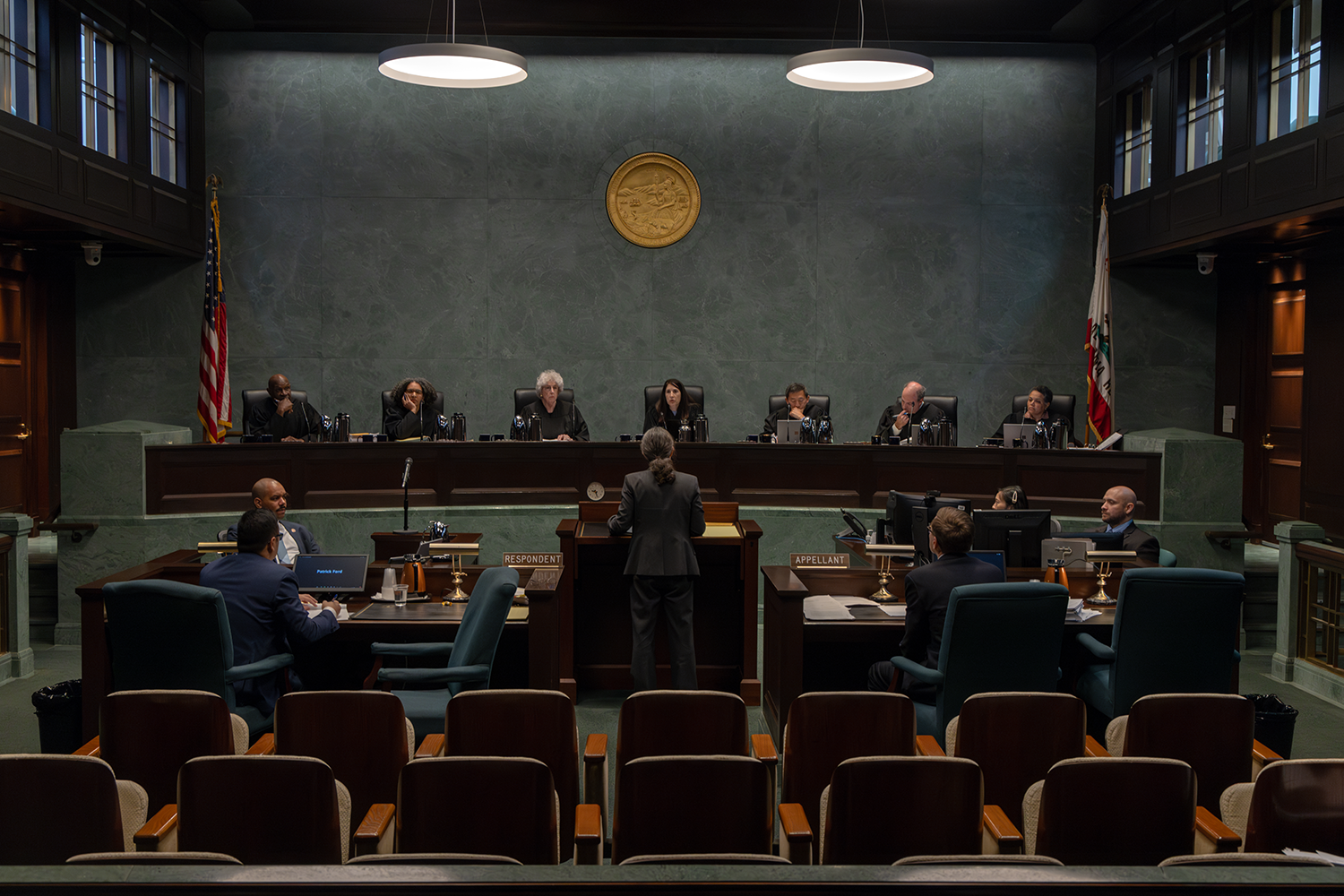
After $75,000 bail over a $7 cheeseburger, California’s Supreme Court ruled that courts cannot jail people with unaffordable bail.
For years, California courts have kept people in jail by setting bail at amounts they could never afford. A judge might say someone was eligible for release, then attach a $50,000 or $100,000 price tag that guaranteed they would remain behind bars. The California Supreme Court has now said that practice violates the state constitution.
The ruling grew out of the case of Gerald Kowalczyk, an unhoused man in San Mateo County who was arrested after using credit cards he found on the ground to buy a $7 cheeseburger. A judge initially set his bail at $75,000 – far more than he could afford – and later denied bail altogether. By the time his case reached the California Supreme Court, Kowalczyk had already served time and been released. But his case led the justices to answer a broader question about how California’s pretrial system should work.
The ruling did not emerge in a vacuum. In 2021, the California Supreme Court’s landmark decision in Humphrey held that judges generally cannot keep people in jail solely because they cannot afford bail. Courts were required to consider a person’s ability to pay and evaluate less restrictive alternatives before ordering detention. But Humphrey left important questions unresolved, and implementation varied widely across the state.
The issue has never only been what the law says on paper, or what a court ruling affirms about how that law should be implemented. The harder part has been shifting courtroom practices in a system that has relied on unaffordable cash bail as a way to detain people, particularly in lower-level cases where preventative detention isn’t an option.
The Kowalczyk decision builds on the foundation of Humphrey. By grounding its analysis in California’s constitutional framework governing pretrial release and detention, the court makes clear in Kowalczyk that judges cannot use unaffordable bail as a substitute for the legal process required to detain someone before trial. If prosecutors believe detention is necessary, they must seek detention directly and satisfy the constitutional standards established for doing so.
The question should not be whether someone has money. The question should be whether detention is truly necessary under the law.
At its core, the decision pushes the system back toward what it was always supposed to focus on. The question should not be whether someone has money. The question should be whether detention is truly necessary under the law.
Most people accused of crimes in California have a constitutional right to be released before trial. If someone is accused of one of the serious, violent or sexual crimes where pretrial detention remains an option, and the prosecutor wants the judge to consider jailing them before trial, they must engage in a comprehensive legal process and meet the evidentiary requirements laid out in the state constitution to prove that release would pose a danger. Courts cannot accomplish the same result by setting bail so high that release becomes impossible.
In other words, California’s legal framework recognizes two distinct questions: whether someone should be detained and whether financial conditions are necessary for release. Judges may no longer blur those questions together by using unaffordable bail as a form of detention.
The Kowalczyk decision does not eliminate cash bail. Judges may still require it, if they believe it will help a person safely appear in court, and they may still consider factors such as public safety and criminal history when setting bail. But when bail is imposed, the amount must be one the defendant can realistically attain. Judges must consider a person’s individual financial circumstances rather than relying solely on a standard bail schedule.
The practical outcomes should be significant. People accused of misdemeanors and most nonviolent felonies should no longer be jailed pretrial. And no one should be jailed simply because they cannot afford bail. Instead, courts will be expected to consider the least restrictive release conditions to ensure safe court return: release on recognizance, to treatment programs, with check-ins or supervision, or other conditions.
That matters because pretrial detention can upend a person’s life long before a verdict is reached. People lose jobs, miss rent payments, fall behind in school, lose custody of children, and face pressure to plead guilty simply to go home. The court acknowledged those realities and reaffirmed a principle that often gets lost in public debates about crime: people accused of crimes are presumed innocent until proven guilty.
The larger challenge now is implementation. Humphrey already showed that court decisions alone do not automatically change courtroom behavior. The ultimate impact of Kowalczyk will depend on how faithfully judges follow it, and on continued advocacy, public defense work, and court watching efforts that make sure the ruling is applied in everyday cases.
We need your help to secure freedom for people trapped behind bars because of unaffordable bail.
Your support gives hope to the thousands of people still trapped in pretrial detention. We’ve supported more than 40,000 clients through free bail assistance and community-based support services like affordable housing and healthcare, and mental health services. You can help secure the freedom of thousands more.
The Bail Project is a 501(c)(3) nonprofit organization that is only able to provide direct services and sustain systems change work through donations from people like you.