
Video Transcript
ARMANI WHITE:
I’m from West Philadelphia. Through and through. Like through and through.
I understand that not a lot of people who come from my neighborhood before me, my generation, even after me, is going to be able to be allotted the world that I’ve been able to build and cultivate for myself. My entire brand has been rooted in positivity, but it’s rooted in positivity because of the negativity that I’ve been exposed to.
You have to strip this ideology that okay, in order for you to actually prove your innocence or to even be validated of innocence, there’s a dollar amount that comes with that. This is important for me because I have friends – I got friends on probation now. They got friends that’s on probation for damn near the rest of their life.
ROBERT:
It can’t be a scenario where the color of your skin, the place that you’re from, and the amount of money that you have is a determining factor about whether or not you get a fair say.
You and me both go to court and have the same allegations, very similar circumstances. You got bread. I don’t. We both get a $10,000 bond and you go home. I stay in jail because I can’t afford to pay for my bond. At that point, you’ve created two justice systems.
ARMANI WHITE:
Yeah.
ROBERT:
One for the people who can afford it.
ARMANI WHITE:
Exactly.
ROBERT:
And one for somebody that can’t.
ARMANI WHITE:
The backstory for the song I wrote, Flash Mob. There’s a bunch of kids who have parties. We throw parties until the cops come and shut it down, and now we just going outside on Saturdays. It’s a bunch of 13, 14, 15, and 16 year old kids that just want attention, just want to be seen.
The news calls us flash mobs. It’s a group of kids coming together to form a mass and cause destruction and violence. That’s all they knew to the city is that it was dangerous. They put a curfew on at 8:00. If any kid is outside after 8:00, they’re getting arrested. And what happens when you do that is you’re no longer talking about a group of 14 to 16 year olds. You’re talking about a bunch of animals that broke out of a cage somewhere, or that needs to be put back into a cage.
For me, when I wrote the song, I wanted to explain it from the perspective of what did it feel like when I was 14 in the flash mobs. Young, wild and free. And then what does it feel like now, 14 years later, when you’re looking at it, it’s like the same people that you call animals.
Now, public figures like myself, you’re talking about now, these local community, like, you know, community leaders and these are the same people who you called animals. These are the same people who y’all wanted in cages, who you was looking for any reason to bastardize. You’re talking about kids who didn’t understand their mark in the world. And now their coming-of-age story is a story that was in a box, you know, in a box with a gate around it.
ROBERT:
There’s a perception, I think, that everybody who comes in and out of these courtrooms and everybody who is in jail is guilty. These people are dressed in an orange jumpsuit, which honestly, is the outfit of a criminal. And people will look at you and say, you wouldn’t be here if you didn’t do anything.
ARMANI WHITE:
What you just said was my exact sentiment when going through what I went through in Kentucky. They pull up. No reason. And, you know, and they just tell me oh you’re going to jail. And I’m in church clothes. when I get in there they just hand me two, like, hand me two layers of clothes. What’s this? Oh, yeah, just change out of what you got on. Put that on. And the reality is, what you just said. It’s for the picture. Put this on for the picture. Because when we put this, when we post this up on it, on the internet, when we show the world what it is and what you look like, we want to – we want to show a criminal.
I smiled in the mug shot, and I know it went viral, whatever, like – and everybody laughed.
I’m like, what was important about smiling in that mugshot was – I was like, I refuse to let you paint me as a criminal.
ROBERT:
The work that we do on the ground level is to be able to serve that one individual who’s experienced that crisis. Anybody give us a referral and say, hey, this person in jail, man, they really need your help. These are the circumstances. We’ll go into the jail, interview the person, we decide, okay, this somebody we think we can help. We’re going to pay their bail.
ARMANI WHITE:
Yeah.
ROBERT:
Every time you got court, we’re going to send you a notification. More than one. We’re going to send it a week in advance. Do you need a ride? If you say we do, we going to set up transportation and get you to and from court.
That gets people through. And so that whole false belief that somebody’s own investment and them putting their own money up is what’s going to get them back to court – we’ve blown that out of the water, and there were people who say that thing that you guys are trying to do, that’ll never work because it’s not their money. Why would they care? They won’t go back to court.
92% of the time people are going back to their court date. So the overwhelming majority of people didn’t need their own money on the line; all they needed was an opportunity to be able to come home.
ARMANI WHITE:
I have a younger – a younger, like, God brother, basically. I grew up with him. He was charged with third degree murder for something he was completely innocent of . And now when, where, when – when he’s going through the trial and I’m talking to his mom and his sisters, and they have no money for a lawyer, and they have no money for their – they’re doing like fundraisers with all the family, all the friends. I’m giving them all the money that I have.
And they’re telling me story – it’s like, this is a kid, who all his life, like, just played basketball. That’s it. Never been in any trouble. Wasn’t a tough guy. Don’t even do drugs. This is like an innocent – he wanted to model. And he a model and play basketball back and forth. And now you’re telling me he’s – he’s third degree murder, that he’s I think he’s now on his year six just being in jail.
When I think about that I’m like, this kid just had his life stripped away from him and he has to come back home, now 30 years old, and figure out what’s the next steps. At that point, you realize, like, my existence is controlled by someone who does not view me as a person. They view me as a docket number.
ROBERT:
We’ve served 40,000 clients at The Bail Project, which is an incredible number by itself.
ARMANI WHITE:
Absolutely.
ROBERT:
But when you put it against the fact that on any given day there could be five, 600,000 people in jail, there’s no army big enough to be able to make that kind of intervention with the individual. The only thing that you can do is hope to be able to change the system.
ARMANI WHITE:
The person closest to the problem is the person closest to the solution, and it’s the person that’s going through this to say, oh there’s something that needs to change here. This is bigger than me. It’s bigger than, you know, so it’s not – this isn’t a conversa– I’m just – I am a piece in this conversation, and I’m – I’m grateful to be a part of this conversation. I’m grateful to lend my platform towards the conversation. Because when you dim that light, when you just like, you make them fall under the umbrella of incarceration or fall under the umbrella of you aren’t good enough. You are this. You’re a criminal, etc. You have to wake up in this room. You have to eat at this time. You go in this and you sit in this cell. You become – the one word is institutionalized. You become institutionalized. Inside and outside. In their mind, it’s not freedom yet. In their mind, I’m still where I am. Because like you trapped something inside of me that’s – that’s prohibited the idea of freedom. And the idea of freedom is just as important as freedom in itself – it’s like, okay, once we’re free, got it.
But, like, how do we make sure that you know that you’re free? Free in spirit, free in mind, free in actions and you can do and create the world that you want to do and create. That is my overall message.
ROBERT:
You said so much. So, once again, brother.
ARMANI WHITE:
Yes, sir.
ROBERT:
Thank you.
ARMANI WHITE:
I appreciate you.
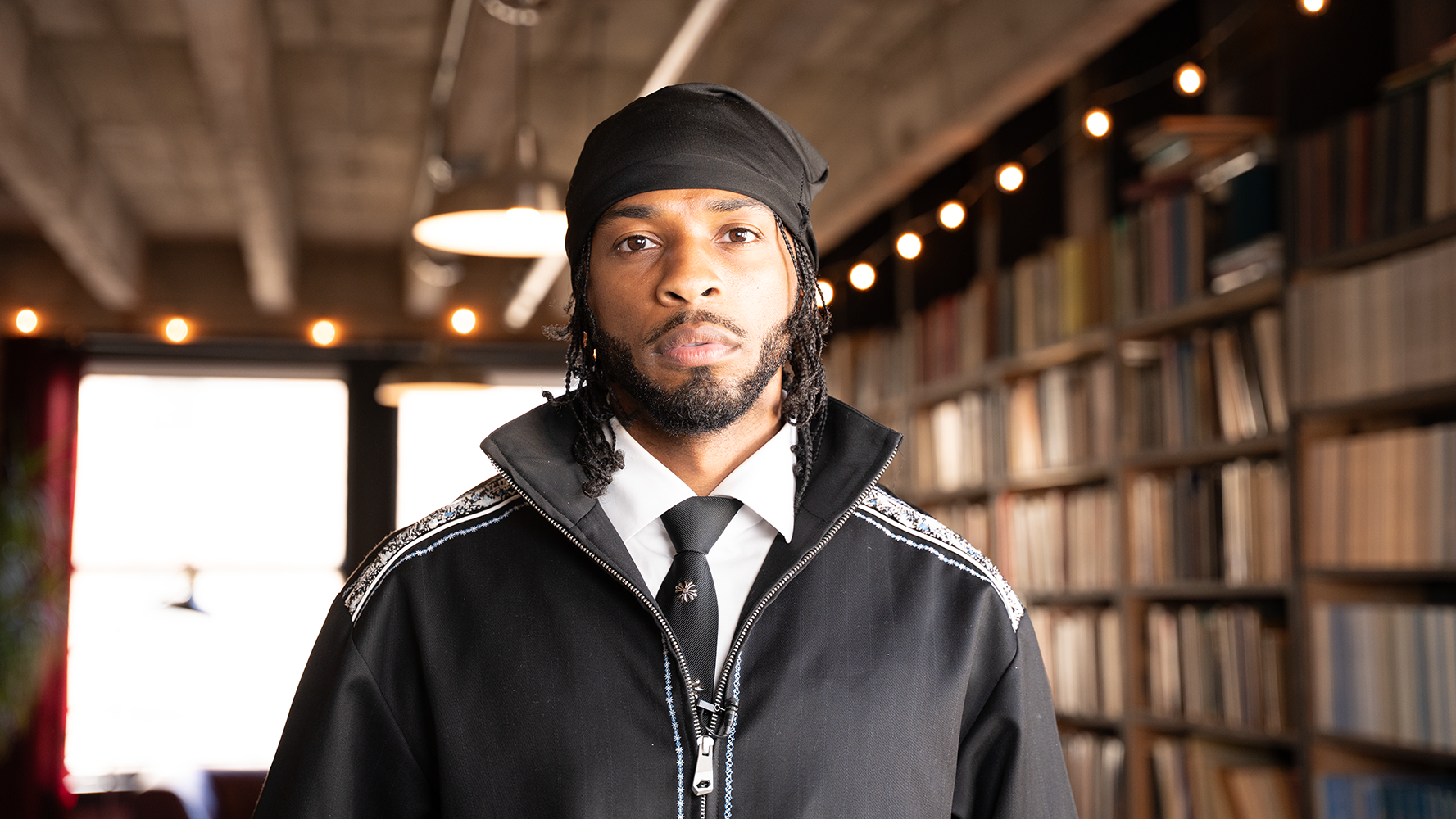
Armani White sits down with The Bail Project to discuss his past, his music, and a more equitable, humane pretrial system
You may already know the multitalented musical artist Armani White for his hit 2022 song “Billie Eilish,” from his social media postings on Tik Tok where he has over 1 million followers – or from his viral mugshot.
What you might not know is that Armani is a staunch advocate for social justice and pretrial reform.
Armani, originally from Philadelphia, has witnessed the direct impact that the nation’s criminal justice system has had on his community. He’s seen how that system disproportionately affects people of color and how cash bail criminalizes poverty, and he believes in a more equitable and humane pretrial system – one that we at The Bail Project know is possible.
“This is bigger than me.”
Armani White’s musical work is deeply personal and influenced by the lived experiences of his family and friends. This is especially true on his recently released album THERE’S A GHOST IN MY HOUSE, with his new single “FLASHMOB.”
“You’re talking about kids who didn’t understand their mark in the world. And now their coming-of-age story is a story that was in a box, you know, in a box with a gate around it.”
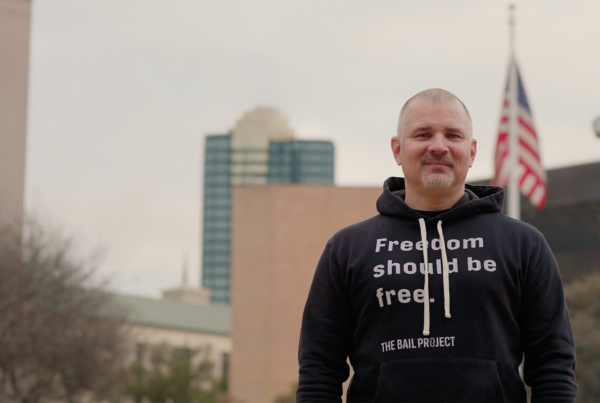
Armani joined Robert, The Bail Project’s National Director of Operations, to discuss “FLASHMOB” and his personal experiences with the criminal justice system. They also talked about how The Bail Project promotes a fairer pretrial system by posting bail for clients and providing essential support throughout their cases.
“I refuse to let you paint me as a criminal.”
While on tour in October 2025, Armani was arrested for filming a music video on the side of a Kentucky highway. His mugshot quickly became national news, turning an encounter with law enforcement into a defining public moment.
Watch how Armani explains how this experience affected his life and deepened his commitment to challenging a system that too often dehumanizes people before they have even had their day in court.

“The only thing that you can do is hope to be able to change the system.”
When Armani talked about “FLASHMOB” and his experiences as an adolescent participating in the flashmobs themselves, he described how Philadelphia law enforcement viewed all the kids involved as “animals that broke out of the cage somewhere,” ones that needed “to be put back into a cage.” He wrote “FLASHMOB” to change that narrative, give a voice to those kids, to humanize them – and to make a difference.
The Bail Project has made a difference as well; to date, we’ve served over 40,000 clients – this, however, represents only a fraction of the 500,000 individuals currently sitting in jail, with more than 60% of them being there merely because they can’t afford to pay bail.
We know continued change is possible, and we encourage you to join us. By inviting others to watch Armani’s video, you’re helping spread the word about the urgent need for bail reform.
To get even more involved, donate today to support freedom and a more just system. Together, we can build a pretrial system that’s fair for everyone – not just those with money.
We need your help to secure freedom for people trapped behind bars because of unaffordable bail.
Your support gives hope to the thousands of people still trapped in pretrial detention. We’ve supported more than 40,000 clients through free bail assistance and community-based support services like affordable housing and healthcare, and mental health services. You can help secure the freedom of thousands more.
The Bail Project is a 501(c)(3) nonprofit organization that is only able to provide direct services and sustain systems change work through donations from people like you.