




Across the country, states are quietly rewriting one of the core protections in our justice system: the right to bail – which was never meant to be about money.
At its origin, the right to bail guaranteed the right to release before trial, ensuring that people accused of a crime could return to their lives and prepare their defense. Cash bail distorted that principle, turning freedom into a transaction that depends on wealth. Today, a new wave of constitutional amendments threatens to take that distortion even further.
In the last few years, more than a quarter of states with a constitutional right to bail have proposed or enacted amendments that make it easier to jail people before trial, tie release to money, or weaken due process. Most of these measures are sold as “public safety” reforms. In reality, many of them expand preventative detention and chip away at the presumption of innocence.
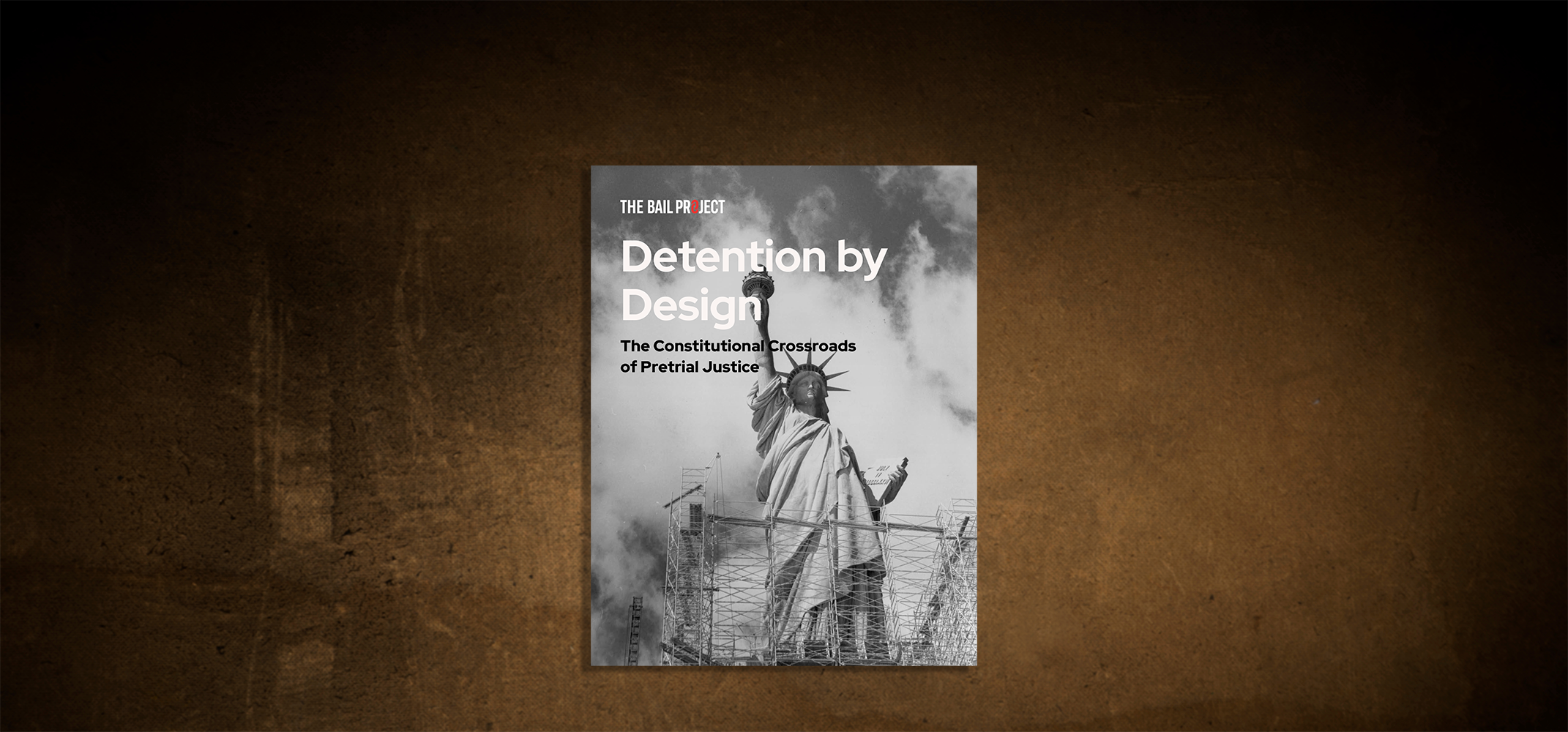
That’s the story we tell in “Detention by Design: The Constitutional Crossroads of Pretrial Justice,” The Bail Project’s new report on the constitutional amendments reshaping pretrial justice – and what advocates can do about it.
Why the right to bail matters
Forty-one states have a right to bail in their constitutions. Properly understood, that right means the right to pretrial liberty — not the right to pay cash bail. It is a safeguard against government overreach, ensuring that detention is the rare exception. When states broaden who can be detained or fail to include basic guardrails like evidentiary standards, written findings, or the right to counsel, that protection collapses — and people can be jailed before they’ve had any chance to defend themselves.
What we’re seeing
The report traces several troubling trends:
- Expanding detention nets. New amendments are using broad, sometimes vague “risk” language that gives courts wide discretion to jail people pretrial.
- Entrenching cash bail. In some states, the “right to bail” is being redefined as a right to have monetary conditions imposed – which means wealth, not safety, still decides who goes home.
- Thin due process. Only a small number of states currently put real procedural protections into their constitutions — things like a prompt hearing, access to counsel, or clear evidentiary standards.
Taken together, these changes move us from a presumption of release toward a presumption of detention.
Advocacy can still win
Not every state is moving in the wrong direction. Texas shows what’s possible when advocates stay at the table. Its 2025 amendment still expands detention eligibility, but organizers pushed successfully for unusually strong due process protections — including the right to counsel at certain hearings and a “clear and convincing” standard before bail can be denied. That makes Texas an outlier in a landscape where most amendments are expanding state power without adding safeguards.
The full report walks through how that happened — and how advocates in other states can insist on the same protections.
What’s inside the report
We don’t just describe the problem – we map it. “Detention by Design” offers:
- Historical context for how we got from broad rights to bail to today’s amendment wave;
- A simple three-part framework for reading any bail amendment (Who can be detained? What guardrails exist? What due process is guaranteed?)
- A set of state spotlights that show how these fights have actually played out.
If your state is talking about “updating” its bail clause, this is the guide you want to have in hand.
A safer, fairer pretrial system is still possible – but only if we see these amendments for what they are, and respond early, clearly, and together.
Thank you for reading and your willingness to engage in a complicated and urgent issue. In addition to providing immediate relief by offering bail assistance, we at The Bail Project are working to advance systemic change. Policy change doesn’t happen without the support of people like you. If you found value in this article, please consider taking action today by donating.