







This Common Dreams op-ed by The Bail Project’s National Director of Policy Erin George argues that Illinois’ Pretrial Fairness Act proves ending cash bail successfully replaces wealth-based detention with objective, judicial risk assessments. She emphasizes that despite political fearmongering and national opposition, data from Illinois shows stable court appearance rates and no increase in crime following the reform’s careful, stakeholder-driven implementation.
Read the op-ed below and on Common Dreams’ website.
Two years ago last month, Illinois became the first state to end cash bail. Critics warned the change would unleash chaos. It didn’t. Instead, Illinois proved that bail reform works — and endures.
Now, Congress and the White House are ignoring those facts, weaponizing fear and misinformation to attack the law and push for rollbacks nationwide. We can’t let them rewrite the story.
All my life, I’ve watched courts measure humanity against a dollar figure, jailing people — including members of my own family — not because they may be dangerous but because they’re poor. Cash bail doesn’t make us safer; it turns freedom into a commodity. That’s why I’ve spent more than a decade working in states across the country to build a pretrial system where safety, not wealth, determines who goes free before trial.
Cash bail doesn’t just punish poverty — it undermines the fundamental purpose of our pretrial system. It jails thousands of legally innocent people simply because they can’t pay, costing taxpayers billions and destabilizing lives. Even a few days behind bars can mean the loss of someone’s job, housing, or custody of their children, pushing them deeper into crisis and increasing the likelihood of future justice system involvement. Meanwhile, those with money — including people who may pose serious risks — can buy their freedom.
Bail reform flips that logic. Under Illinois’ Pretrial Fairness Act, judges still decide when someone must be detained, but those decisions follow real hearings where evidence is presented — not the size of someone’s bank account. People can still be held if they pose a risk, but no one is jailed simply for being poor, and no one can buy their way out.
Despite the facts, public fear about crime is often driven not by bail reform but by visible crises like homelessness, untreated mental illness, and addiction — problems our legal system was never designed to solve. Too often, these conditions are criminalized through low-level charges instead of addressed with care. Cash bail can’t fix them — but investments in housing, treatment, and community services can. Yet just as those solutions are most needed, President Donald Trump and Congress slashed their funding. That failure, not bail reform, is the real threat to public safety.
Illinois recognized cash bail’s harm and built a different path. Its Pretrial Fairness Act is a national model, proving that reform is possible, sustainable, and broadly supported when built with care. The act was drafted with input from legal experts, lawmakers, impacted leaders, victims’ rights advocates, and grassroots organizers, balancing ideals and practical realities. Negotiations required compromise, but the core principle held: No one would be jailed simply for being poor.
Courts and communities had two years to prepare before the law took effect, and the coalition that championed it didn’t scatter — it trained judges, secured funding, and defended the law. The Bail Project, where I work, was one of many partners demonstrating the law’s potential. From 2019 to 2022, we provided free bail assistance and pretrial support to nearly 1,500 low-income Illinoisans — 95% of whom returned to court without having money on the line. Building on that work, we invested $2.9 million in Chicago to pilot a supportive pretrial release model linking people to housing, jobs, healthcare, transportation, and court reminders. We also connected people released on recognizance bonds with affordable apartments — showing how stability keeps people from cycling back into jail.
Since implementation, crime did not surge — in fact, Chicago had its lowest summer murder rate since the 1960s — and court appearance rates held steady. The evidence is clear: Communities are not less safe because people are no longer detained for being poor. Illinois shows that when freedom is determined by risk and evidence rather than wealth, safety and fairness go hand in hand.
Yet even in the face of evidence, critics continue to exploit public anxieties about crime. In several states, misinformation has derailed reform — from outright repeal in Alaska to rapid rollbacks in New York and California. Illinois broke that pattern. Lawmakers held firm, recognizing that retreat would betray the communities most harmed by cash bail. That resolve is what separates reforms that endure from those that collapse.
Illinois did not just pass bail reform with the Pretrial Fairness Act — it built a safer, fairer, and more lasting pretrial system. Other states should take note. The lesson from Illinois is clear: Reform is not easy, but it is achievable and worth the fight.
History shows this pattern again and again: Every generation confronts reforms once branded as dangerous. Seat belt laws. Social Security. Medicaid. Each was dismissed as risky. Each is now recognized as essential. Illinois’ Pretrial Fairness Act belongs in that lineage.
Thank you for reading and your willingness to engage in a complicated and urgent issue. In addition to providing immediate relief by offering bail assistance, we at The Bail Project are working to advance systemic change. Policy change doesn’t happen without the support of people like you. If you found value in this article, please consider taking action today by donating.



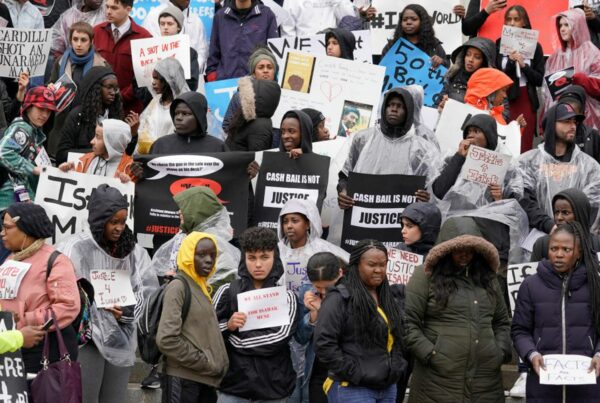


Inquest: “How the War on Drugs Packed Jails”