



Cash bail plays a central role in the American criminal justice system, shaping who is detained, who is released, and at what cost to individuals and taxpayers.
Despite its impact, the cash bail system is often misunderstood. Bail decisions influence case outcomes, public safety, and government spending long before a trial begins. In practice, the use of money as a condition of pretrial release has contributed to the growth of the American jail population and broader patterns of mass incarceration in the United States – with measurable implications for fairness, effectiveness, and fiscal responsibility.
At its core, the cash bail system raises fundamental concerns about the presumption of innocence and due process – principles that are intended to guide how individuals are treated before conviction.
1. Nearly Half a Million Legally Innocent People Are Detained Pretrial – Costing $14 Billion Annually
On any given day, nearly half a million people sit in U.S. jails without a conviction. Many have already been assessed by a court and deemed eligible for pretrial release, but remain detained because they cannot afford bail.
This distinction highlights a core feature of the current criminal justice system: detention is often driven not by risk, but by financial capacity.
The fiscal impact is significant. State and local governments spend an estimated $14 billion annually on pretrial incarceration. This underscores a fundamental policy challenge: whether public resources are being allocated in ways that meaningfully advance public safety.
2. The United States Is One of Only Two Countries in the World With a For-Profit Bail Industry
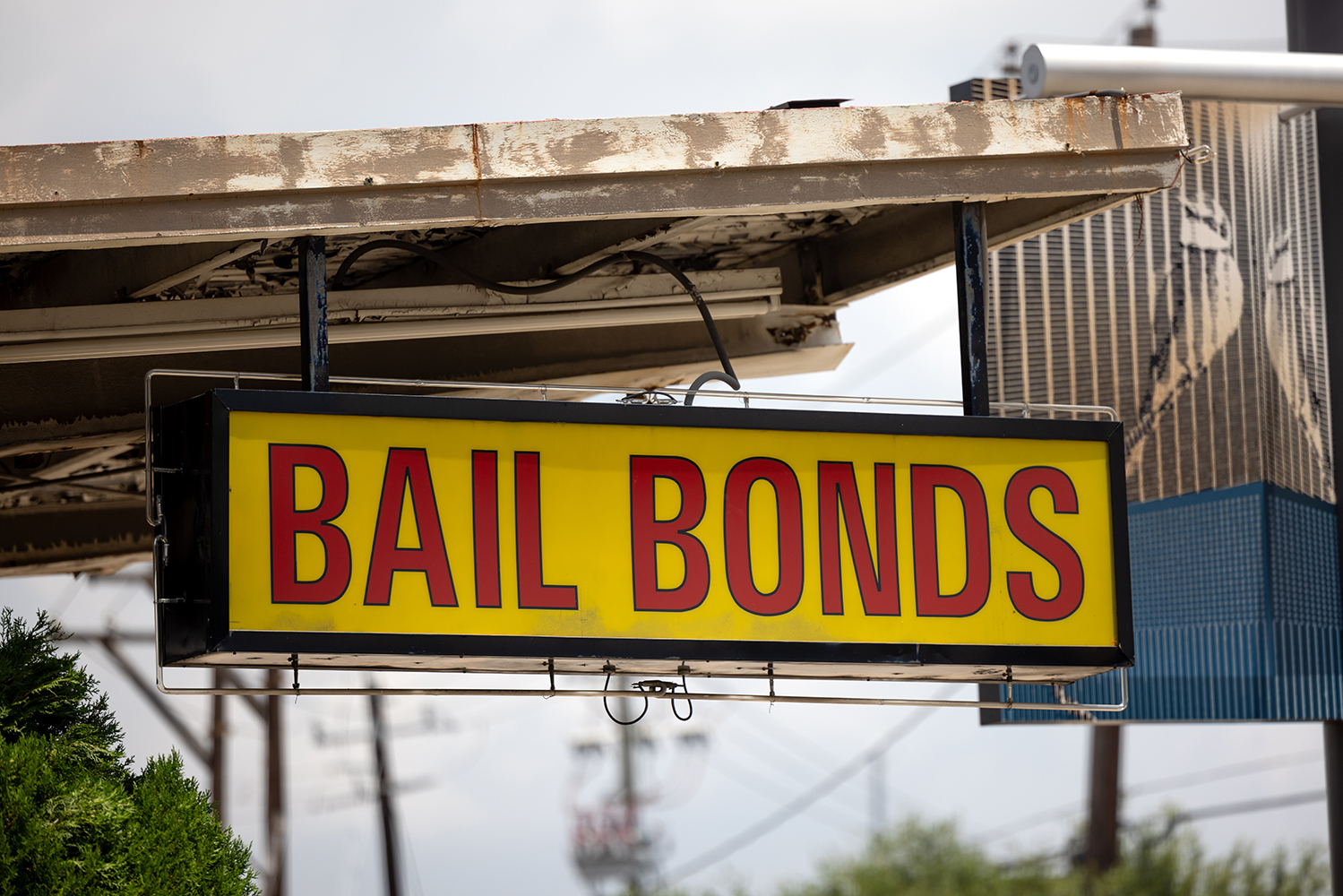
The United States is one of only two countries that permits a commercial bail bond industry, where private companies profit from pretrial release decisions within the criminal justice system.
When bail is set at an unaffordable amount, individuals and families often turn to bail bondsmen, paying a nonrefundable fee – typically around 10% of the bail amount, though sometimes more. Unlike bail paid directly to the court, this payment is not returned, regardless of the case outcome.
The industry generates approximately $2 billion annually, largely from working-class households. At the same time, it plays an active role in shaping policy debates, with organizations such as the American Bail Coalition investing in lobbying efforts to preserve the current system.
This structure places financial incentives at the center of pretrial decision-making, prompting closer scrutiny of how profit motives intersect with judicial outcomes.
3. Bail Funds Are a Longstanding Part of American Legal Tradition
Community-based bail funds and charitable bail organizations are not a recent innovation – they are part of a long-standing American tradition of supporting pretrial release.
Historically, bail funds were used during the Civil Rights Movement to secure the release of individuals protesting segregation and fighting for voting rights. These efforts reflected a broader principle: that detention before trial should not be used to silence or punish people.
Today, charitable bail funds continue this work by providing free bail assistance and supportive services. These models offer a real-world example of how nonfinancial approaches to pretrial release can function effectively at scale.
4. Pretrial Incarceration Destabilizes Lives and Is Associated with Higher Rates of Future System Involvement
Time spent in pretrial detention – often inside jail environments not designed for long-term stability – has immediate and compounding effects on individuals and families.
Even short periods inside jail can result in job loss, housing instability, and disruption to family responsibilities.
These disruptions are directly linked to future outcomes. Research shows that people held in pretrial incarceration are more likely to experience subsequent arrests, not necessarily because of increased risk, but because detention destabilizes the conditions that support long-term stability.
5. Pretrial Incarceration Pressures People Into Pleading Guilty
The principle of due process – alongside the right to legal counsel – depends on individuals having a meaningful opportunity to contest charges.
However, for those held in pretrial detention, that opportunity is constrained.
Individuals who remain in jail while their cases proceed face strong incentives to resolve their cases quickly. In many instances, that leads to guilty pleas – even when individuals may have viable defenses – because it offers the fastest path to release.
This dynamic shifts case outcomes away from evidence-based adjudication and toward resolution driven by circumstance, with significant implications for due process.
6. People of Color Are Assigned Higher Bail Amounts
Data on the population in jail by race shows that people of color – particularly Black individuals – are more likely to be assigned bail, receive higher bail amounts, and remain detained pretrial compared to white individuals facing similar charges.
On average, bail amounts for Black defendants are set nearly $10,000 higher, and they are also significantly more likely to remain in jail before trial.
These disparities are not fully explained by differences in risk and point to structural inequities within the pretrial system. Addressing these disparities is central to ensuring that pretrial policy operates in a manner that is both fair and consistent.
7. Jails Have Become the Nation’s Largest Mental Health Providers
In the absence of sufficient community-based mental health infrastructure, jails have become de facto providers of mental health care within the criminal justice system.
Facilities such as Rikers Island in New York City, Men’s Central Jail in Los Angeles, and Cook County Jail in Chicago now house large numbers of people with unmet mental health needs inside jail settings. In many cases, incarceration interrupts treatment, limits access to medication, and exacerbates existing conditions.
Alternative approaches – such as crisis response teams, diversion programs, and community-based treatment – have demonstrated more effective outcomes. This highlights the importance of aligning pretrial practices with broader public health and behavioral health strategies.
8. Pretrial Detention Has Lasting Effects on Children and Families
The impact of pretrial detention extends beyond the individual to their families and communities. Children of incarcerated parents experience immediate disruption, including separation, emotional stress, and economic instability.
This is particularly significant given the growing number of women in jail, many of whom are incarcerated parents and primary caregivers.
Approximately 5 million children in the United States – about 1 in 12 – have experienced parental incarceration, with disproportionate impacts on Black families. Research links these experiences to long-term educational and developmental challenges, from lower standardized test scores and higher dropout rates to increased disciplinary issues and reduced satisfaction with school.
Taken together, these impacts reflect the broader social costs of pretrial detention – one that extends across generations and contributes to long-term inequality.
9. Evidence from Multiple Jurisdictions Shows That Bail Reform Can Maintain Public Safety
A growing body of research shows that bail reform – including efforts to reduce reliance on cash bail – does not increase crime and can improve pretrial outcomes. And Americans of all political backgrounds agree that our cash bail system is broken. In fact, twice as many Americans favor ending cash bail over keeping it.
States and cities nationwide that implemented bail reform policies have maintained high court appearance rates while reducing unnecessary pretrial detention. In some cases, reforms have been associated with reductions in rearrest rates and overall crime.
For example, reforms in Harris County, Texas were associated with improved outcomes for individuals charged with misdemeanors, including reductions in rearrests. States such as New Jersey and Illinois have also demonstrated that it is possible to move away from cash bail while maintaining public safety. A nationwide study by the Brennan Center for Justice looked at nearly two dozen jurisdictions that reformed cash bail and found the same thing: no link between bail reform and increases in crime.
These findings reinforce that pretrial systems can be designed to prioritize both safety and fairness, without relying on financial conditions.
10. The Bail Project Demonstrates That Money Is Not Required for Pretrial Success
Since its founding, The Bail Project has supported more than 40,000 people navigating the pretrial system through pretrial intervention and pretrial release support. Nearly 35,000 received free bail assistance alongside court reminders, transportation support, and voluntary referrals to services. Those people returned to 92% of their court dates, demonstrating that charitable bail organizations can operate effectively at scale.
In addition, The Bail Project’s pilot programs have supported thousands more by addressing barriers such as outstanding warrants, housing instability, and access to legal services.
These outcomes demonstrate that high rates of court appearance and community stability can be achieved without cash bail. The Bail Project’s model provides a proof of concept: a pretrial system that prioritizes support over detention can operate effectively at scale.
Beyond individual outcomes, these efforts have prevented more than 1.4 million days of pretrial incarceration and generated more than $100 million in cost savings to taxpayers – illustrating the broader fiscal and public safety benefits of reform.
Building a More Effective Pretrial System
Across jurisdictions and outcomes, the evidence outlined above points to a consistent conclusion: the current cash bail system is not well-aligned with public safety, fiscal responsibility, or equitable treatment under the law within the criminal justice system.
Expanding pretrial intervention, investing in diversion programs, and reducing unnecessary pretrial incarceration can help jurisdictions move away from wealth-based detention while strengthening outcomes.
We need your help to secure freedom for people trapped behind bars because of unaffordable bail.
Your support gives hope to the thousands of people still trapped in pretrial detention. We’ve supported more than 40,000 clients through free bail assistance and community-based support services like affordable housing and healthcare, and mental health services. You can help secure the freedom of thousands more.
The Bail Project is a 501(c)(3) nonprofit organization that is only able to provide direct services and sustain systems change work through donations from people like you.