
A public defender’s view of justice, poverty, and showing up
What do we mean when we call someone a “flight risk” or a “failure to appear”? And what does it cost us to get it wrong?
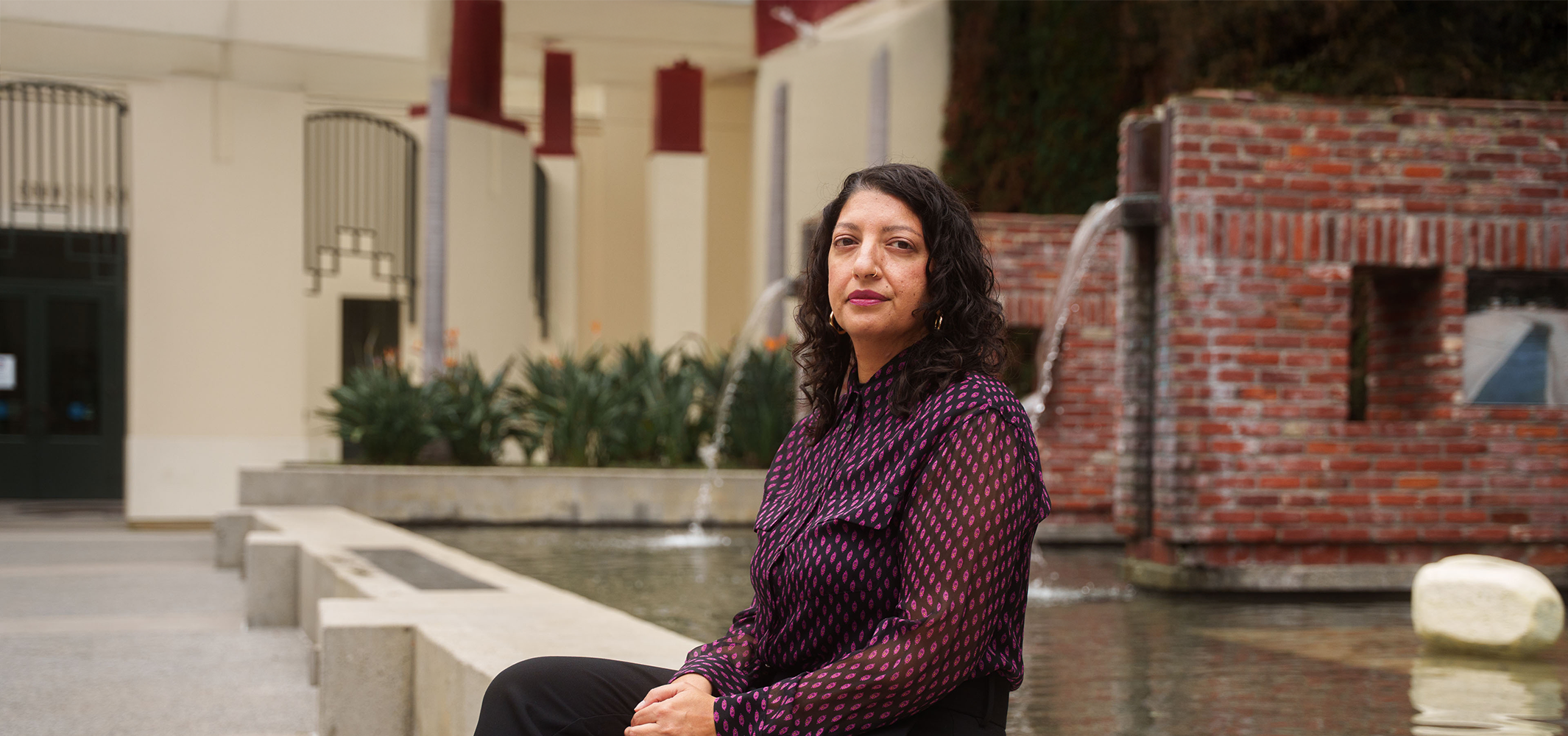
Alicia Virani has spent years on the front lines of the legal system – as a public defender, a legal scholar, and the founding director of the UCLA Law’s Pretrial Justice Clinic. Her view of the pretrial process is shaped by firsthand experience with the human impact of our bail and detention practices. According to her, the way we talk about “flight risk” is deeply misleading – and dangerously overblown.
In many courtrooms, the label is used to justify jailing someone before their trial ever begins. But Virani says the overwhelming majority of people do return to court, especially when given basic support like reminders and transportation help. Missed appearances, she argues, are almost never about avoiding justice. They are about insufficient resources, overwork, system failures, and the ordinary chaos of life.
Yet persistent myths about flight risk have led to policies that destabilize lives and trap people behind bars. What follows is a breakdown of the most common fictions – and what the facts, and Virani’s lived experience, actually reveal.

Fiction: Most people released pretrial will flee and never return to court.

Fact: Most people come back.
When someone misses court, it’s usually not an escape attempt. It’s everyday life: they couldn’t get off work, got stuck in traffic, had no childcare, or simply forgot. In many places, the most cited reason for missing court is lack of transportation. True attempts to flee prosecution are extremely rare.
Virani explains that the assumption that people skip court to avoid accountability is simply false. “People miss court because their car broke down, because they couldn’t get childcare, because they simply forgot,” she says. “Especially those without financial means are not fleeing the jurisdiction.”
While working in Orange County, California, Virani represented many unhoused clients who missed court dates for reasons outside their control. Often, their belongings were confiscated by police, including court paperwork. Despite that, her team could almost always locate them. “Our investigators usually found them easily. They were still in the community, often in the same places every day.” These experiences revealed that missed court dates are more about instability and lack of support than a desire to escape justice.

Fiction: Setting high bail is necessary to make sure people come back to court.
Fact: Money doesn’t bring people back – support does.
National data shows that court appearance rates remain high even when people are released without paying bail. Programs like The Bail Project, which offers free bail assistance and court reminders, prove that supportive services, not punishment, keep people connected to their cases.
Virani challenges the idea that financial pressure is what ensures accountability. She points to research from community bail funds that found return-to-court rates above 90 percent, even when the bail was paid by someone else.
“What gets people back to court isn’t a financial penalty,” she says. “It’s support. These funds offer reminders, help with logistics, and someone to call. That makes the difference.”
In her experience, people show up when they feel seen and supported. The bail system, she argues, simply punishes poverty rather than increasing accountability.
Fiction: If someone misses court, they’re a flight risk.
Fact: Missing court is usually about logistics, not intent.
Failure to appear (FTA) rates vary widely, from 17 percent to 48 percent, and are often tied to systemic barriers. Court dates may be rescheduled without notice, and most jurisdictions do not offer reminders. In places that do send texts or email alerts, missed court appearances drop by up to 35 percent.
Virani saw how court systems create risk on paper where none exists in real life. She describes how people are expected to appear at 8:30 a.m., but if they arrive even slightly late, a judge may issue a warrant. “Someone might come to court at 3:00 p.m. that same day, but the warrant has already been issued,” she says.
These missed appearances, often due to transportation delays or childcare conflicts, shape how judges treat someone years later. “If a person is charged again in the future, a judge may call them a flight risk because of a past bench warrant. But that missed appearance may have had a completely reasonable explanation.”
Fiction: “Failure to appear” means someone is fleeing justice.
Fact: Missing court is not the same as running, or willful flight.
People are often mislabeled as flight risks for being late, overwhelmed, or navigating instability. The idea that people actively try to evade prosecution is largely exaggerated.
“Advocates have been working to reframe this issue as a risk of nonappearance,” Virani says. “That’s something we can address with support and communication. It’s not the same as someone who is trying to leave the country.”
She notes that even unhoused clients, who are often unfairly labeled as transient or unreachable, have daily routines and community ties. One client, for example, went to the same Starbucks every day to charge his phone. “That is someone with a routine. Someone who is part of a community,” Virani says. “We need to understand people’s lives from a different vantage point.”

Fiction: Pretrial detention keeps us safe.
Fact: It often makes things worse.
People held before trial are legally innocent. Still, just a few days in jail can lead to lost jobs, evictions, child custody issues, and long-term destabilization. Research shows that unnecessary pretrial detention actually increases the likelihood of a future arrest because of how disruptive it is – a phenomenon known as its criminogenic effect.
The destabilization of even a short period of incarceration, “[T]ears families apart,” Virani says. “When we incarcerate the primary breadwinner in a household, we create ripple effects that stretch across generations.”
That disruption doesn’t just harm families – it also undermines public safety. That’s why Virani calls for a broader, more accurate definition of public safety – one that considers the person accused and their family and community as part of the public and whose long-term wellbeing contributes to safe communities.
Fiction: Judges only have two choices: bail or jail.
Fact: There are many proven alternatives.
Virani explains that the binary of bail versus jail is a false choice. “Judges can release someone on their own recognizance. They can issue stay-away orders, require attendance at support meetings, or refer people to pretrial service programs,” she says.
From personal recognizance to community-based programs, judges have a wide range of effective, nonfinancial tools at their disposal. In jurisdictions that have implemented these alternatives to cash bail, the results speak for themselves.
In Washington, D.C., where cash bail is largely eliminated, over 90 percent of people still return to court. In New Jersey, after major reforms, both court appearance rates and public safety metrics remained stable – if not improved.
Many of these alternatives are more effective and far less damaging. Still, judges often default to cash bail and detention out of fear that something might go wrong. “The judiciary is very risk-averse,” Virani says. “That fear of being blamed publicly is not how judicial decisions should be made.”
She emphasizes that people should be released in the vast majority of cases, and that conditions of release should only be added when absolutely necessary. “Judges need to evaluate each person individually and apply the least restrictive conditions needed to ensure appearance and public safety.”
A Better Path is Already Working
The Bail Project’s national model proves that another approach is possible. By combining free bail assistance with simple support like reminders and transportation help, we’ve helped tens of thousands of people return to court – without extracting money or resorting to jail. Our data shows that with support, not punishment, people overwhelmingly show up.
Time to Rethink Risk
The myth of “flight risk” isn’t just wrong – it’s harmful, expensive, and unjust. It punishes people for being poor, for lacking support, or for getting caught in a system that doesn’t make room for real life.
If we want a system that’s fair and effective, we need to let go of fear-based labels and start from a place of understanding. The evidence is clear: people show up when we show up for them.
We need your help to secure freedom for people trapped behind bars because of unaffordable bail.
Your support gives hope to the thousands of people still trapped in pretrial detention. We’ve supported more than 40,000 clients through free bail assistance and community-based support services like affordable housing and healthcare, and mental health services. You can help secure the freedom of thousands more.
The Bail Project is a 501(c)(3) nonprofit organization that is only able to provide direct services and sustain systems change work through donations from people like you.